Giant Wolf Spider
Hogna carolinensis
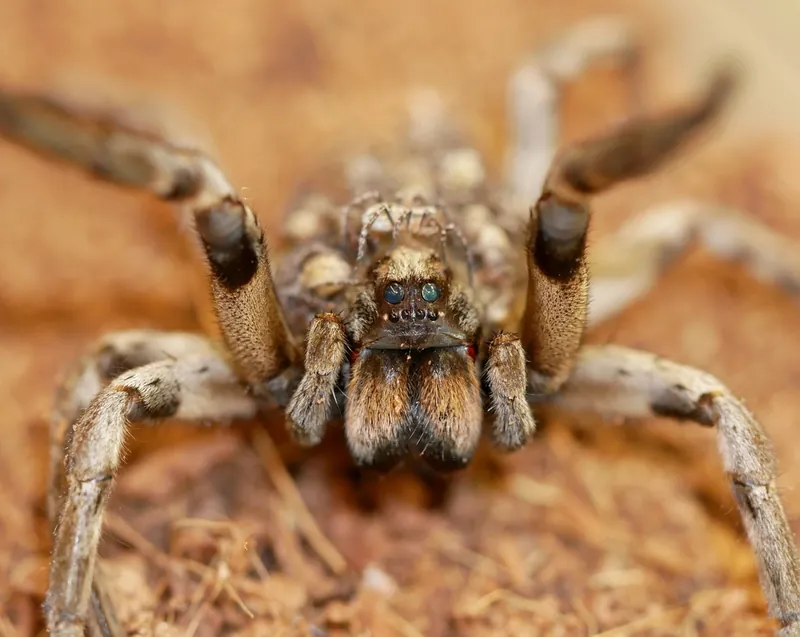
The Giant Wolf Spider (Hogna carolinensis) is a spider in the family Lycosidae. Open-licence records place it in 9 states under the records rule (ten or more records in three or more years), most of them in Texas (146 of 478 records nationwide).
The most records come from Texas (146), Arizona (118) and New Mexico (34). In Texas it has been recorded in 20 different years since 2000, 146 open-licence records in all.
Open-licence records from the lower 48 that carry a month (342 of them) peak in June and are fewest in December.
Where the Giant Wolf Spider is recorded
| State | Open records | Years | Peak month |
|---|---|---|---|
| Texas | 146 | 20 | April |
| Arizona | 118 | 20 | June |
| New Mexico | 34 | 13 | |
| Colorado | 29 | 13 | |
| Florida | 18 | 10 | |
| Kansas | 18 | 9 | |
| Illinois | 17 | 3 | |
| Oklahoma | 13 | 4 | |
| Utah | 10 | 9 |
A state is listed with ten or more open-licence records of the species in three or more years since 2000. No range map exists for this species in the sources this site uses; records follow observers as well as animals, so a missing state is not shown to be an absence.
When it is recorded
Lists it appears on
Sources
- Catalogue of Life (via GBIF vernacular names). CC BY 4.0. Read 2026-11-16.
- GBIF Backbone Taxonomy. CC BY 4.0. Read 2026-11-15.
- GBIF occurrence records under CC0 and CC BY 4.0. CC0 and CC BY 4.0 per record. Read 2026-11-16.
- iNaturalist photographs under CC0 and CC BY. CC0 and CC BY per photograph. Read 2026-11-15.
How each figure is derived is set out on the methods page.