Warblers in Iowa
35 species of warblers have a mapped range in Iowa. 22 are mapped across the whole state, among them the Bay-breasted Warbler, the Black-and-White Warbler and the Black-throated Green Warbler.
The most restricted is the Prairie Warbler, mapped in under 1% of the state.
The heaviest is the Yellow-breasted Chat, at 0.9 oz (25 g); the lightest is the Wilson's Warbler, at 0.2 oz (7 g).
Of these, 14 in summer only and 21 on migration only.
The most species are mapped in Lee County (34); the fewest in Audubon County (23).
Open-licence records in the state (1,289 of them) peak in May and are fewest in February.
The most often recorded is the Common Yellowthroat, with 695 open-licence records in the state.
- 23 to 24
- 25 to 27
- 28 to 29
- 30 to 32
- 33 to 34
| Species | Size | Share of Iowa | Active | Records | |
|---|---|---|---|---|---|
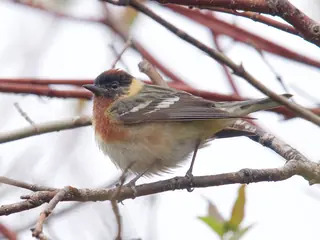 | Bay-breasted Warbler migration Setophaga castanea Parulidae | 0.4 oz (12 g) | all | day | 24 |
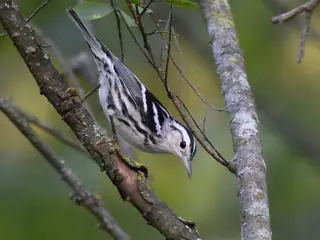 | Black-and-White Warbler migration Mniotilta varia Parulidae | 0.4 oz (11 g) | all | day | 337 |
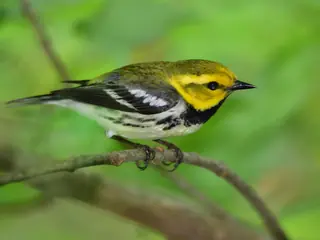 | Black-throated Green Warbler migration Setophaga virens Parulidae | 0.3 oz (8.7 g) | all | day | 152 |
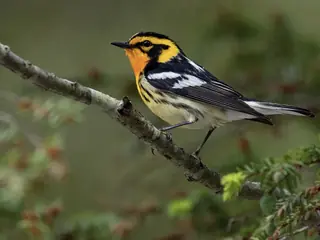 | Blackburnian Warbler migration Setophaga fusca Parulidae | 0.3 oz (9.7 g) | all | day | 38 |
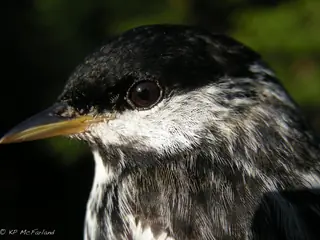 | Blackpoll Warbler migration Setophaga striata Parulidae | 0.4 oz (12 g) | all | day | 36 |
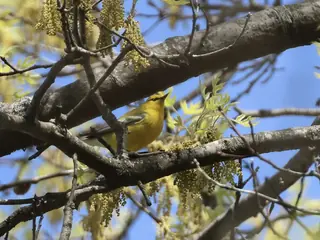 | Blue-winged Warbler summer Vermivora cyanoptera Parulidae | 0.3 oz (8.9 g) | all | day | 9 |
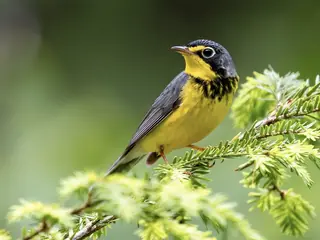 | Canada Warbler migration Cardellina canadensis Parulidae | 0.4 oz (10 g) | all | day | 310 |
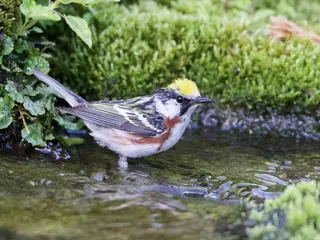 | Chestnut-sided Warbler migration Setophaga pensylvanica Parulidae | 0.3 oz (9.3 g) | all | day | 51 |
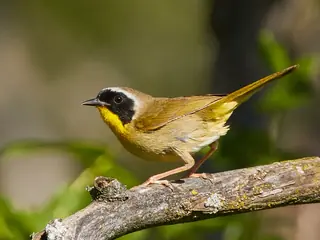 | Common Yellowthroat summer Geothlypis trichas Parulidae | 0.3 oz (9.5 g) | all | day | 695 |
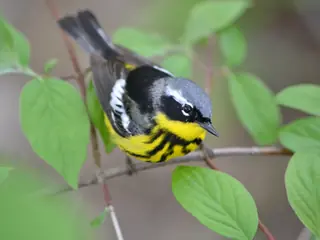 | Magnolia Warbler migration Setophaga magnolia Parulidae | 0.3 oz (8.1 g) | all | day | 368 |
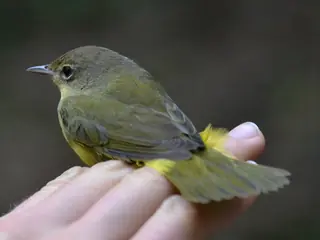 | Mourning Warbler migration Geothlypis philadelphia Parulidae | 0.4 oz (12 g) | all | day | 187 |
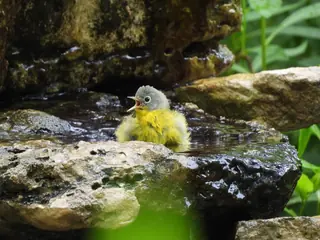 | Nashville Warbler migration Leiothlypis ruficapilla Parulidae | 0.3 oz (8.1 g) | all | day | 370 |
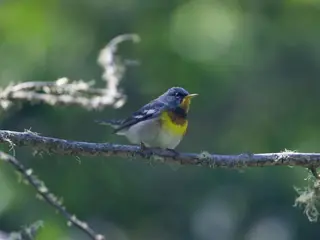 | Northern Parula migration Setophaga americana Parulidae | 0.3 oz (7.8 g) | all | day | 110 |
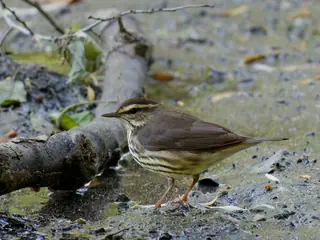 | Northern Waterthrush migration Parkesia noveboracensis Parulidae | 0.6 oz (16 g) | all | day | 245 |
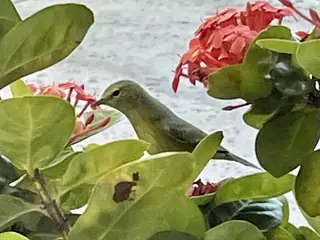 | Orange-crowned Warbler migration Leiothlypis celata Parulidae | 0.3 oz (9.2 g) | all | day | 211 |
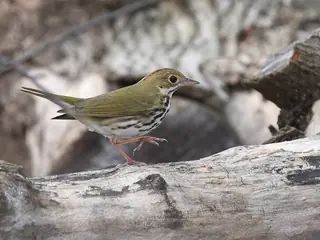 | Ovenbird summer Seiurus aurocapilla Parulidae | 0.7 oz (19 g) | all | day | 461 |
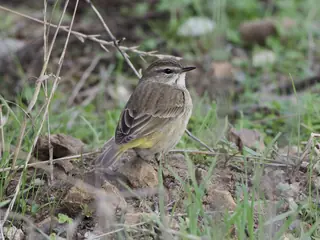 | Palm Warbler migration Setophaga palmarum Parulidae | 0.4 oz (10 g) | all | day | 397 |
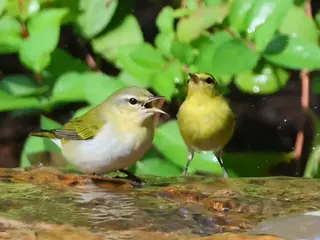 | Tennessee Warbler migration Leiothlypis peregrina Parulidae | 0.3 oz (8.9 g) | all | day | 364 |
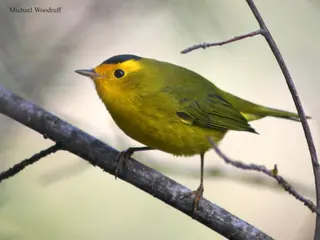 | Wilson's Warbler migration Cardellina pusilla Parulidae | 0.2 oz (7 g) | all | day | 491 |
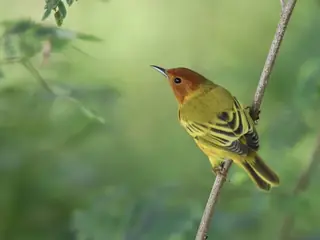 | Yellow Warbler summer Setophaga petechia Parulidae | 0.4 oz (10 g) | all | day | 454 |
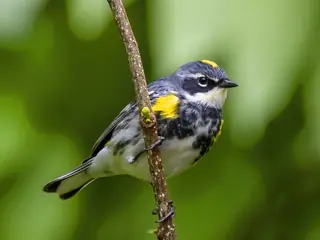 | Yellow-rumped Warbler migration Setophaga coronata Parulidae | 0.4 oz (12 g) | all | day | 656 |
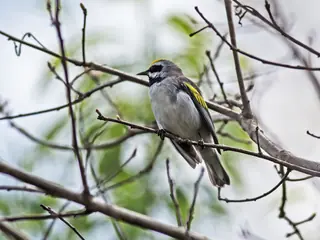 | Golden-winged Warbler migration Vermivora chrysoptera Parulidae | 0.3 oz (8.7 g) | all | day | 73 |
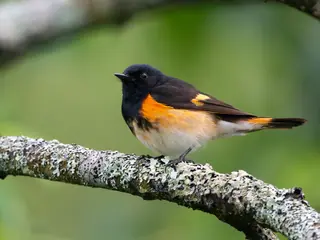 | American Redstart summer Setophaga ruticilla Parulidae | 0.3 oz (8.2 g) | 96% | day | 136 |
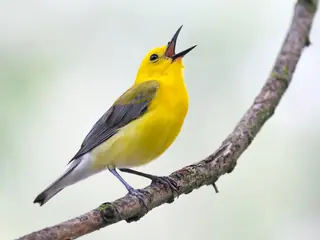 | Prothonotary Warbler summer Protonotaria citrea Parulidae | 0.5 oz (14 g) | 75% | day | 145 |
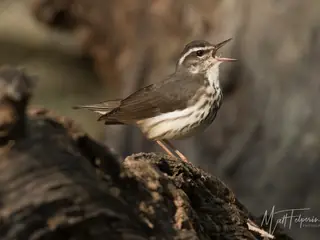 | Louisiana Waterthrush summer Parkesia motacilla Parulidae | 0.7 oz (20 g) | 60% | day | 168 |
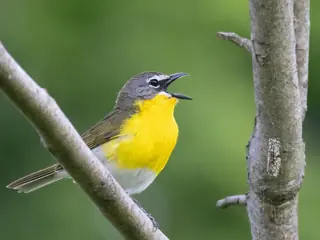 | Yellow-breasted Chat summer Icteria virens Parulidae | 0.9 oz (25 g) | 58% | day | 228 |
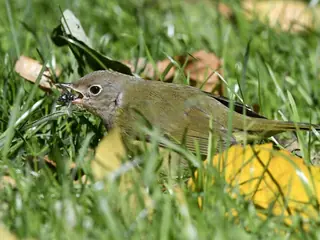 | Connecticut Warbler migration Oporornis agilis Parulidae | 0.5 oz (13 g) | 32% | day | 42 |
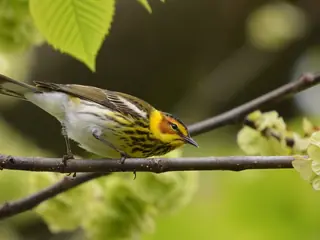 | Cape May Warbler migration Setophaga tigrina Parulidae | 0.4 oz (10 g) | 30% | day | 95 |
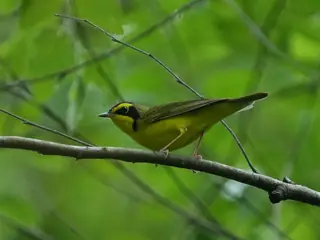 | Kentucky Warbler summer Geothlypis formosa Parulidae | 0.5 oz (14 g) | 26% | day | 57 |
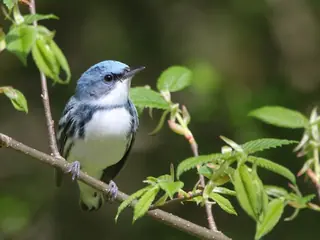 | Cerulean Warbler summer Setophaga cerulea Parulidae | 0.3 oz (9 g) | 20% | day | 14 |
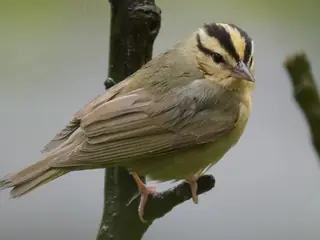 | Worm-eating Warbler summer Helmitheros vermivorum Parulidae | 0.5 oz (14 g) | 17% | day | 29 |
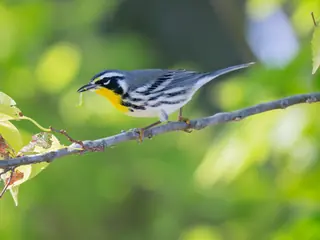 | Yellow-throated Warbler summer Setophaga dominica Parulidae | 0.3 oz (9.7 g) | 8% | day | 16 |
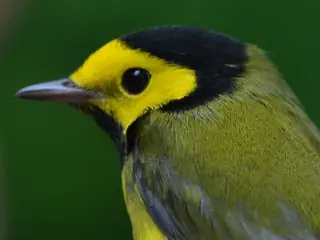 | Hooded Warbler summer Setophaga citrina Parulidae | 0.4 oz (11 g) | under 1% | day | 4 |
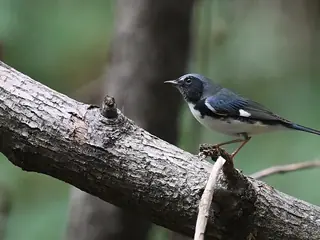 | Black-throated Blue Warbler migration Setophaga caerulescens Parulidae | 0.4 oz (10 g) | under 1% | day | 26 |
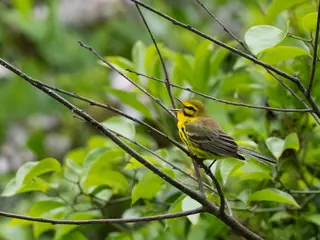 | Prairie Warbler summer Setophaga discolor Parulidae | 0.3 oz (7.6 g) | under 1% | day | 1 |
Share of Iowa is the part of the state inside the species' USGS range map. Size is the largest on record where the source gives a maximum, otherwise a typical adult. Records are open-licence observations and specimens in the state, with eBird left out; a blank means none were counted, not that the species is absent.
More Iowa lists
Other groups in Iowa
Warblers in nearby states
Sources
- AVONET: morphological ecological and geographical data for all birds. CC BY 4.0. Read 2026-11-15.
- EltonTraits 1.0. CC0. Read 2026-11-15.
- GBIF Backbone Taxonomy. CC BY 4.0. Read 2026-11-15.
- GBIF occurrence records under CC0 and CC BY 4.0. CC0 and CC BY 4.0 per record. Read 2026-11-15.
- US Census Bureau cartographic boundary files 2023. Public domain (US Census Bureau). Read 2026-11-15.
- USGS GAP 12-digit hydrologic unit range units. Public domain (USGS). Read 2026-11-15.
- USGS Gap Analysis Project Species Range Maps CONUS_2001. Public domain (USGS). Read 2026-11-15.
- iNaturalist photographs under CC0 and CC BY. CC0 and CC BY per photograph. Read 2026-11-15.
How each figure is derived is set out on the methods page.