Rodents in Rhode Island
19 species of rodents have a mapped range in Rhode Island. 12 are mapped across the whole state, among them the Brown Rat, the Common Muskrat and the Eastern Chipmunk.
The most restricted is the North American Porcupine, mapped in 3% of the state.
The longest is the American Beaver, at 2.6 ft (777 mm); the shortest is the Woodland Jumping Mouse, at 3.7 in (95 mm).
USGS marks 2 of them as introduced in the state: the Brown Rat and the House Mouse.
The most species are mapped in Providence County (18); the fewest in Newport County (16).
Open-licence records in the state (705 of them) peak in December and are fewest in February.
The most often recorded is the White-footed Deermouse, with 257 open-licence records in the state.
By the trait records, 10 are active at night, 4 are active by day and 4 are active by day and by night.
They belong to 6 families; the largest here is Cricetidae, with 7 species.
- 16
- 17
- 18
| Species | Size | Share of Rhode Island | Active | Records | |
|---|---|---|---|---|---|
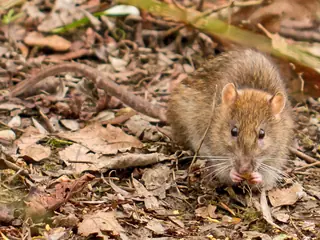 | Brown Rat introduced Rattus norvegicus Muridae | 12 in (300 mm) body | all | night | 20 |
 | Common Muskrat Ondatra zibethicus Cricetidae | 12 in (301 mm) body | all | night | 65 |
 | Eastern Chipmunk Tamias striatus Sciuridae | 6.5 in (166 mm) body | all | day | 49 |
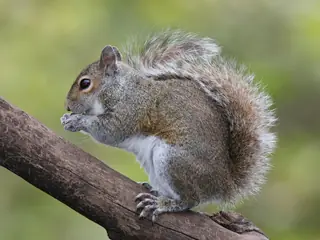 | Eastern Gray Squirrel Sciurus carolinensis Sciuridae | 12 in (315 mm) body | all | day | 59 |
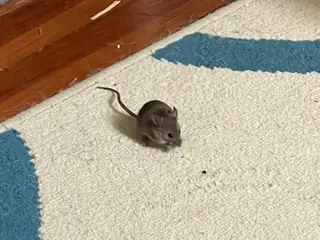 | House Mouse introduced Mus musculus Muridae | 3.7 in (95 mm) body | all | night | 21 |
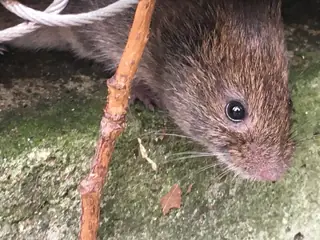 | Meadow Vole Microtus pennsylvanicus Cricetidae | 4.8 in (122 mm) body | all | day and night | 176 |
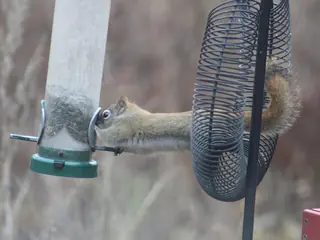 | Red Squirrel Tamiasciurus hudsonicus Sciuridae | 7.5 in (190 mm) body | all | day | 28 |
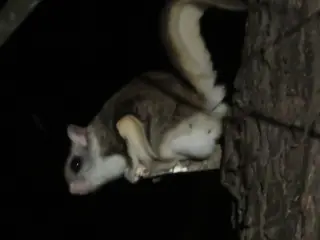 | Southern Flying Squirrel Glaucomys volans Sciuridae | 6.8 in (172 mm) body | all | night | |
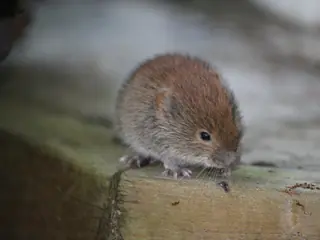 | Southern Red-backed Vole Myodes gapperi Cricetidae | 4.3 in (110 mm) body | all | day and night | 40 |
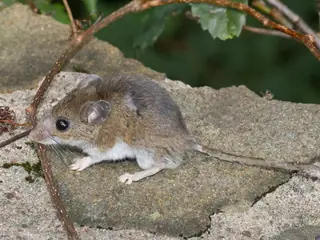 | White-footed Deermouse Peromyscus leucopus Cricetidae | 4.0 in (101 mm) body | all | night | 257 |
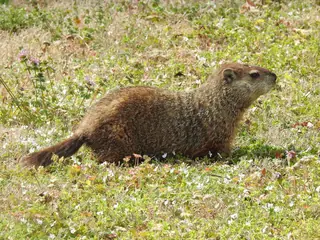 | Woodchuck Marmota monax Sciuridae | 20 in (506 mm) body | all | day | 18 |
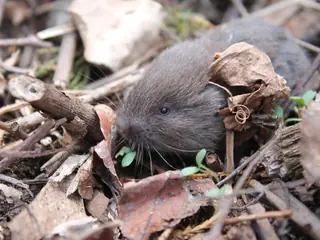 | Woodland Vole Microtus pinetorum Cricetidae | 4.1 in (103 mm) body | all | day and night | 1 |
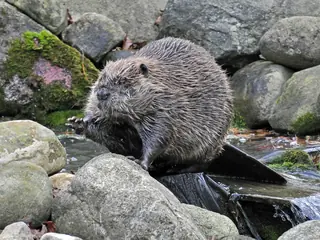 | American Beaver Castor canadensis Castoridae | 2.6 ft (777 mm) body | 99% | night | 4 |
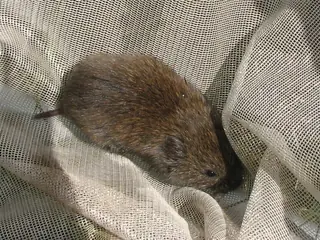 | Southern Bog Lemming Synaptomys cooperi Cricetidae | 4.6 in (118 mm) body | 99% | day and night | |
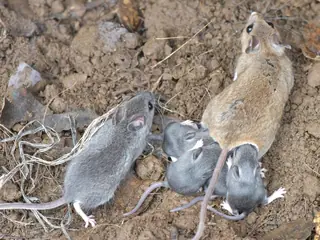 | North American Deermouse Peromyscus maniculatus Cricetidae | 3.9 in (99 mm) body | 93% | night | |
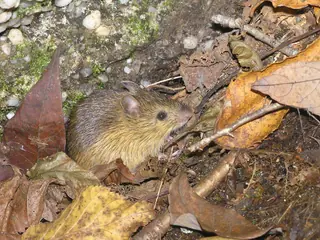 | Meadow Jumping Mouse Zapus hudsonius Dipodidae | 3.9 in (98 mm) body | 81% | night | 2 |
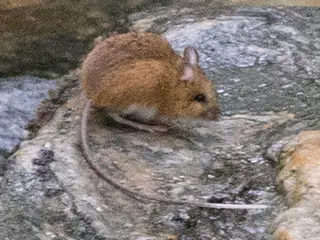 | Woodland Jumping Mouse Napaeozapus insignis Dipodidae | 3.7 in (95 mm) body | 77% | night | |
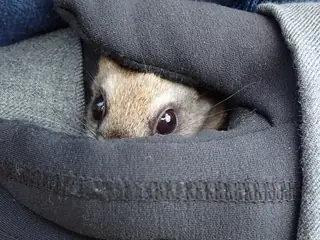 | Northern Flying Squirrel Glaucomys sabrinus Sciuridae | 11 in (268 mm) body | 36% | night | |
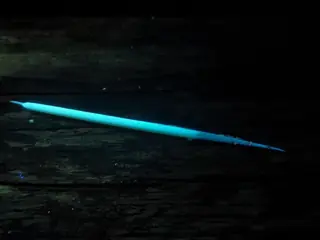 | North American Porcupine Erethizon dorsatus Erethizontidae | 17.7 lb (8.0 kg) | 3% |
Share of Rhode Island is the part of the state inside the species' USGS range map. Size is the largest on record where the source gives a maximum, otherwise a typical adult. Records are open-licence observations and specimens in the state; a blank means none were counted, not that the species is absent.
More Rhode Island lists
Other groups in Rhode Island
Rodents in nearby states
Sources
- Amniote life-history database. CC0. Read 2026-11-15.
- COMBINE: a coalesced mammal database of intrinsic and extrinsic traits. CC BY 4.0. Read 2026-11-15.
- EltonTraits 1.0. CC0. Read 2026-11-15.
- GBIF Backbone Taxonomy. CC BY 4.0. Read 2026-11-15.
- GBIF occurrence records under CC0 and CC BY 4.0. CC0 and CC BY 4.0 per record. Read 2026-11-15.
- US Census Bureau cartographic boundary files 2023. Public domain (US Census Bureau). Read 2026-11-15.
- USGS GAP 12-digit hydrologic unit range units. Public domain (USGS). Read 2026-11-15.
- USGS Gap Analysis Project Species Range Maps CONUS_2001. Public domain (USGS). Read 2026-11-15.
- iNaturalist photographs under CC0 and CC BY. CC0 and CC BY per photograph. Read 2026-11-15.
How each figure is derived is set out on the methods page.