Frogs and toads in New Mexico
25 species of frogs and toads have a mapped range in New Mexico. 3 are mapped across the whole state, among them the Mexican Spadefoot, the Plains Spadefoot and the Woodhouse's Toad.
The most restricted is the Spotted Chorus Frog, mapped in under 1% of the state.
The longest is the American Bullfrog, at 8.0 in (203 mm); the shortest is the Spotted Chorus Frog, at 1.3 in (32 mm).
The most species are mapped in Hidalgo County (16); the fewest in Curry County (9).
Open-licence records in the state (5,455 of them) peak in July and are fewest in January.
The most often recorded is the Mexican Spadefoot, with 893 open-licence records in the state.
They belong to 6 families; the largest here is Bufonidae, with 9 species.
- 9 to 10
- 11
- 12 to 13
- 14
- 15 to 16
| Species | Size | Share of New Mexico | Active | Records | |
|---|---|---|---|---|---|
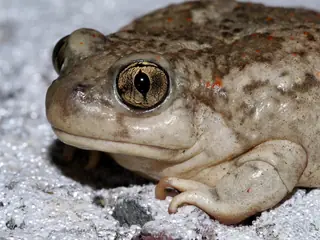 | Mexican Spadefoot Spea multiplicata Scaphiopodidae | 2.5 in (64 mm) body | all | night | 893 |
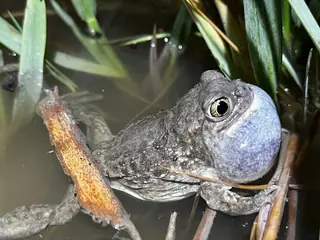 | Plains Spadefoot Spea bombifrons Scaphiopodidae | 2.5 in (64 mm) body | all | night | 702 |
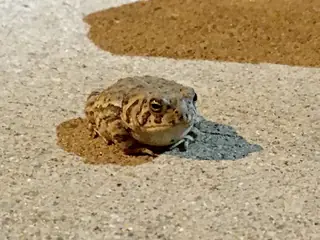 | Woodhouse's Toad Anaxyrus woodhousii Bufonidae | 5.0 in (127 mm) body | all | 729 | |
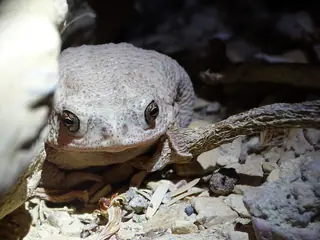 | Red-spotted Toad Anaxyrus punctatus Bufonidae | 3.0 in (76 mm) body | 99% | 532 | |
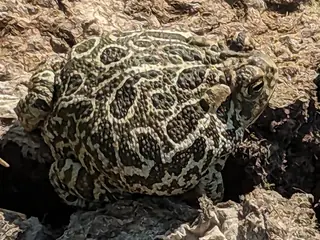 | Great Plains Toad Anaxyrus cognatus Bufonidae | 4.5 in (114 mm) body | 80% | day | 621 |
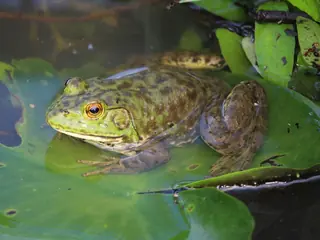 | American Bullfrog Lithobates catesbeianus Ranidae | 8.0 in (203 mm) body | 71% | day and night | 204 |
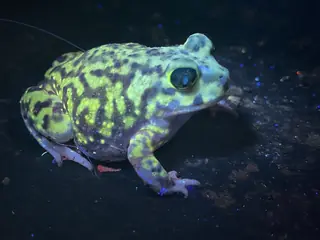 | Couch's Spadefoot Scaphiopus couchii Scaphiopodidae | 3.1 in (80 mm) body | 67% | night | 625 |
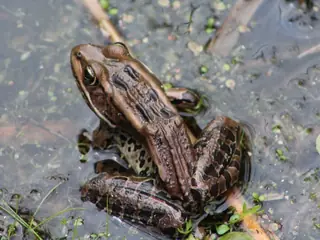 | Northern Leopard Frog Lithobates pipiens Ranidae | 6.5 in (165 mm) body | 65% | 380 | |
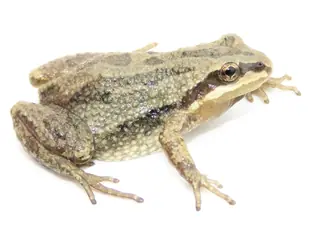 | Boreal Chorus Frog Pseudacris maculata Hylidae | 2.0 in (52 mm) body | 63% | day and night | 45 |
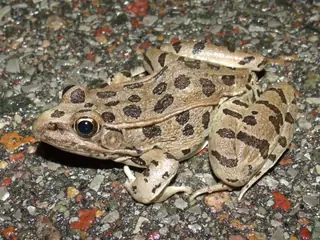 | Plains Leopard Frog Lithobates blairi Ranidae | 4.4 in (111 mm) body | 56% | 93 | |
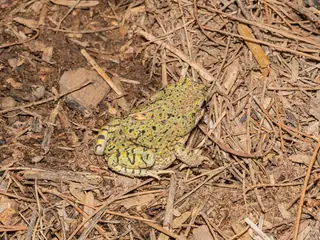 | Green Toad Anaxyrus debilis Bufonidae | 2.1 in (54 mm) body | 53% | 572 | |
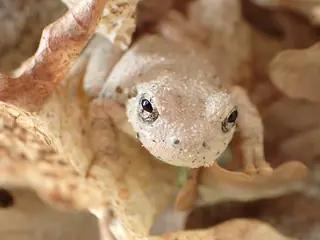 | Canyon Treefrog Dryophytes arenicolor Hylidae | 2.2 in (57 mm) body | 49% | night | 250 |
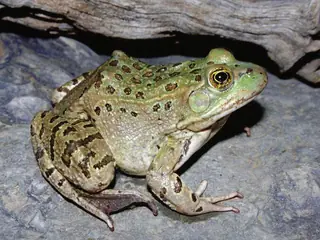 | Chiricahua Leopard Frog Lithobates chiricahuensis Ranidae | 5.3 in (135 mm) body | 20% | 183 | |
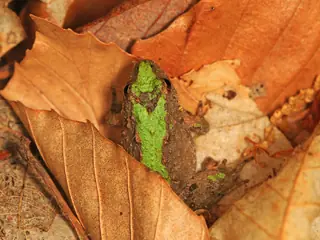 | Northern Cricket Frog Acris crepitans Hylidae | 1.5 in (38 mm) body | 15% | day and night | 69 |
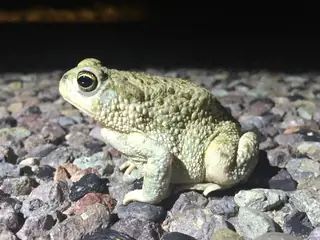 | Texas Toad Anaxyrus speciosus Bufonidae | 3.6 in (92 mm) body | 13% | 152 | |
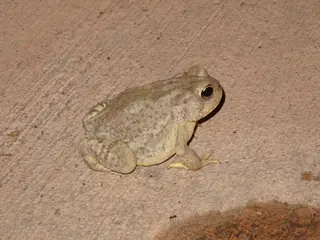 | Arizona Toad Anaxyrus microscaphus Bufonidae | 3.2 in (81 mm) body | 11% | 271 | |
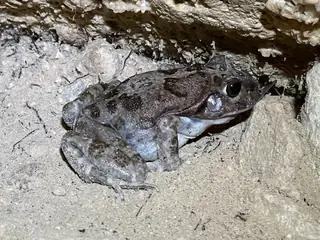 | Barking Frog Craugastor augusti Craugastoridae | 3.7 in (95 mm) body | 11% | day | 12 |
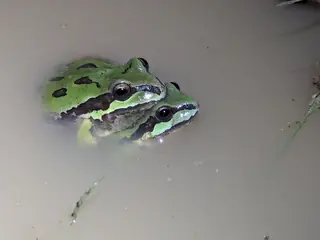 | Arizona Treefrog Dryophytes wrightorum Hylidae | 1.9 in (48 mm) body | 9% | 11 | |
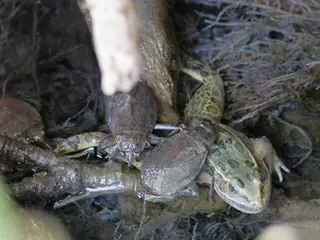 | Lowland Leopard Frog Lithobates yavapaiensis Ranidae | 5.3 in (135 mm) body | 9% | 12 | |
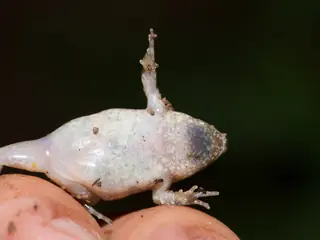 | Western Narrow-mouthed Toad Gastrophryne olivacea Microhylidae | 1.6 in (41 mm) body | 6% | day and night | 6 |
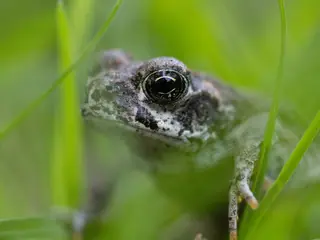 | Western Toad Anaxyrus boreas Bufonidae | 4.9 in (125 mm) body | 4% | dawn and dusk | 6 |
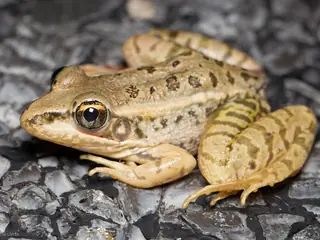 | Rio Grande Leopard Frog Lithobates berlandieri Ranidae | 4.7 in (120 mm) body | 4% | 84 | |
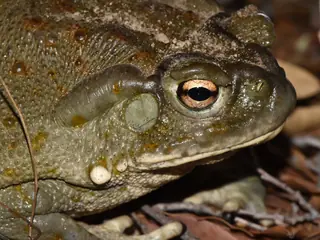 | Sonoran Desert Toad possible Incilius alvarius Bufonidae | 6.5 in (165 mm) body | 4% | night | 25 |
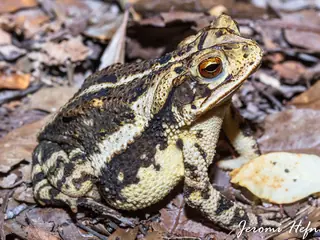 | Gulf Coast Toad Incilius nebulifer Bufonidae | 4.9 in (125 mm) body | under 1% | ||
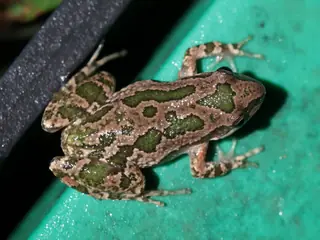 | Spotted Chorus Frog Pseudacris clarkii Hylidae | 1.3 in (32 mm) body | under 1% | day and night | 1 |
Share of New Mexico is the part of the state inside the species' USGS range map. Size is the largest on record where the source gives a maximum, otherwise a typical adult. Records are open-licence observations and specimens in the state; a blank means none were counted, not that the species is absent.
More New Mexico lists
Other groups in New Mexico
Frogs and toads in nearby states
Sources
- AmphiBIO v1. CC BY 4.0. Read 2026-11-15.
- GBIF Backbone Taxonomy. CC BY 4.0. Read 2026-11-15.
- GBIF occurrence records under CC0 and CC BY 4.0. CC0 and CC BY 4.0 per record. Read 2026-11-15.
- US Census Bureau cartographic boundary files 2023. Public domain (US Census Bureau). Read 2026-11-15.
- USGS GAP 12-digit hydrologic unit range units. Public domain (USGS). Read 2026-11-15.
- USGS Gap Analysis Project Species Range Maps CONUS_2001. Public domain (USGS). Read 2026-11-15.
- iNaturalist photographs under CC0 and CC BY. CC0 and CC BY per photograph. Read 2026-11-15.
How each figure is derived is set out on the methods page.