Squirrels and chipmunks in New Mexico
21 species of squirrels and chipmunks have a mapped range in New Mexico. The most widespread is the Spotted Ground Squirrel, mapped across all of the state.
The most restricted is the Mexican Fox Squirrel, mapped in under 1% of the state.
The longest is the Yellow-bellied Marmot, at 20 in (506 mm); the shortest is the Least Chipmunk, at 4.4 in (112 mm).
USGS marks 1 of them as introduced in the state: the Eastern Fox Squirrel.
The most species are mapped in Bernalillo County (13); the fewest in Curry County (4).
Open-licence records in the state (11,535 of them) peak in July and are fewest in February.
The most often recorded is the Colorado Chipmunk, with 1,653 open-licence records in the state.
- 4 to 6
- 7
- 8 to 10
- 11
- 12 to 13
| Species | Size | Share of New Mexico | Active | Records | |
|---|---|---|---|---|---|
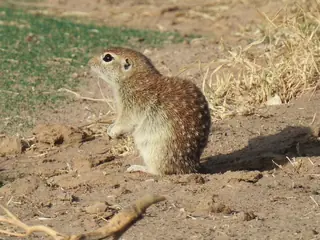 | Spotted Ground Squirrel Xerospermophilus spilosoma Sciuridae | 11 in (276 mm) body | all | day | 1,121 |
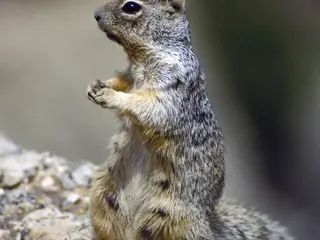 | Rock Squirrel Otospermophilus variegatus Sciuridae | 13 in (340 mm) body | 93% | day | 1,399 |
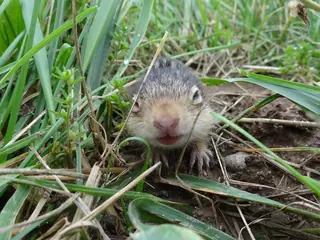 | Thirteen-lined Ground Squirrel Ictidomys tridecemlineatus Sciuridae | 11 in (272 mm) body | 71% | day | 280 |
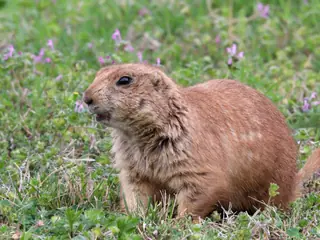 | Black-tailed Prairie Dog Cynomys ludovicianus Sciuridae | 13 in (330 mm) body | 59% | day | 267 |
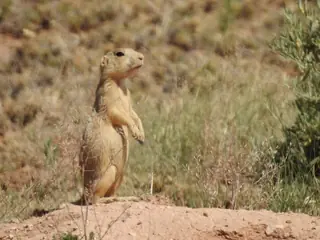 | Gunnison's Prairie Dog Cynomys gunnisoni Sciuridae | 12 in (305 mm) body | 46% | day | 998 |
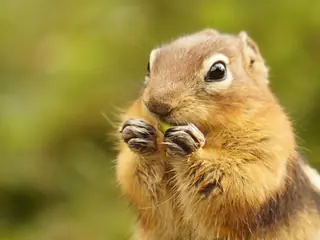 | Golden-mantled Ground Squirrel Callospermophilus lateralis Sciuridae | 12 in (310 mm) body | 44% | day | 1,059 |
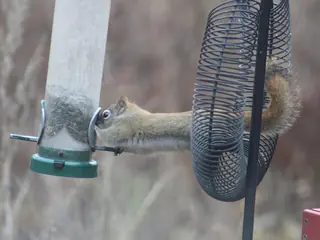 | Red Squirrel Tamiasciurus hudsonicus Sciuridae | 7.5 in (190 mm) body | 32% | day | 971 |
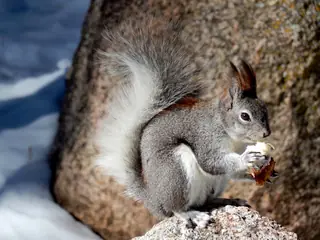 | Abert's Squirrel Sciurus aberti Sciuridae | 12 in (292 mm) body | 32% | day | 635 |
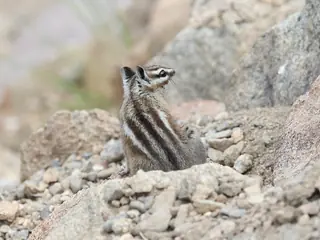 | Colorado Chipmunk Tamias quadrivittatus Sciuridae | 4.8 in (122 mm) body | 28% | day | 1,653 |
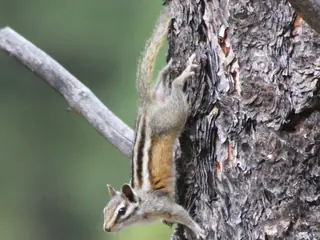 | Gray-collared Chipmunk Tamias cinereicollis Sciuridae | 5.0 in (128 mm) body | 25% | day | 473 |
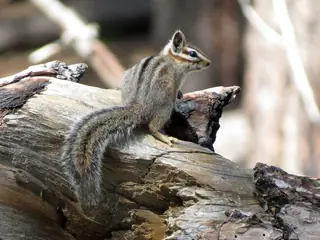 | Cliff Chipmunk Tamias dorsalis Sciuridae | 4.9 in (125 mm) body | 24% | day | 853 |
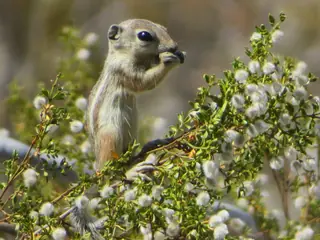 | White-tailed Antelope Squirrel Ammospermophilus leucurus Sciuridae | 6.3 in (160 mm) body | 24% | day | 223 |
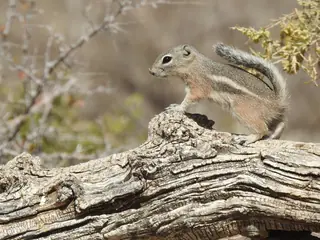 | Texas Antelope Squirrel Ammospermophilus interpres Sciuridae | 6.3 in (160 mm) body | 20% | day | 210 |
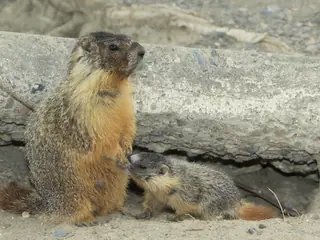 | Yellow-bellied Marmot Marmota flaviventris Sciuridae | 20 in (506 mm) body | 18% | day | 141 |
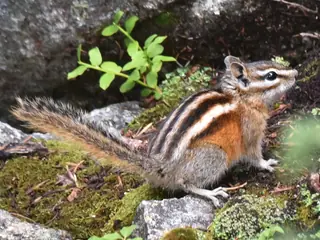 | Least Chipmunk Tamias minimus Sciuridae | 4.4 in (112 mm) body | 16% | day | 1,192 |
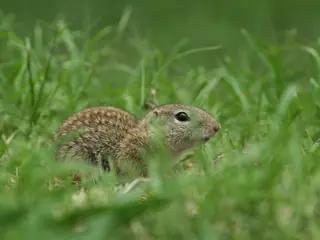 | Mexican Ground Squirrel Ictidomys mexicanus Sciuridae | 12 in (300 mm) body | 9% | day | 72 |
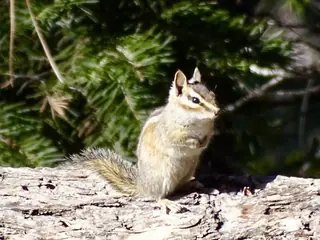 | Gray-footed Chipmunk Tamias canipes Sciuridae | 5.2 in (131 mm) body | 7% | day | 409 |
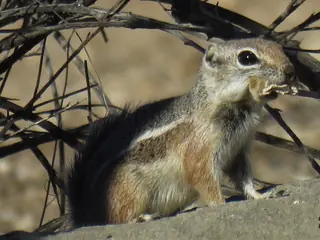 | Harris' Antelope Squirrel Ammospermophilus harrisii Sciuridae | 6.4 in (164 mm) body | 5% | day | 60 |
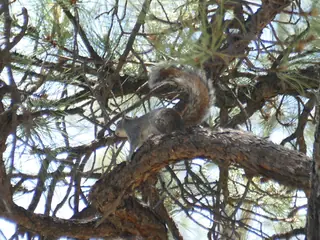 | Arizona Gray Squirrel Sciurus arizonensis Sciuridae | 10 in (263 mm) body | 2% | day | 40 |
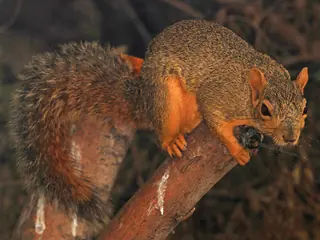 | Eastern Fox Squirrel introducedpossible Sciurus niger Sciuridae | 16 in (418 mm) body | under 1% | day | 32 |
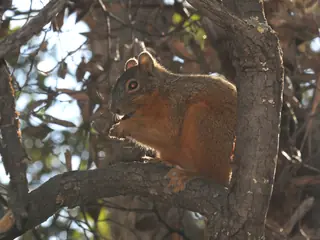 | Mexican Fox Squirrel Sciurus nayaritensis Sciuridae | 12 in (299 mm) body | under 1% | day |
Share of New Mexico is the part of the state inside the species' USGS range map. Size is the largest on record where the source gives a maximum, otherwise a typical adult. Records are open-licence observations and specimens in the state; a blank means none were counted, not that the species is absent.
Other groups in New Mexico
Squirrels and chipmunks in nearby states
Sources
- COMBINE: a coalesced mammal database of intrinsic and extrinsic traits. CC BY 4.0. Read 2026-11-15.
- EltonTraits 1.0. CC0. Read 2026-11-15.
- GBIF Backbone Taxonomy. CC BY 4.0. Read 2026-11-15.
- GBIF occurrence records under CC0 and CC BY 4.0. CC0 and CC BY 4.0 per record. Read 2026-11-15.
- PanTHERIA 1.0. CC0. Read 2026-11-15.
- US Census Bureau cartographic boundary files 2023. Public domain (US Census Bureau). Read 2026-11-15.
- USGS GAP 12-digit hydrologic unit range units. Public domain (USGS). Read 2026-11-15.
- USGS Gap Analysis Project Species Range Maps CONUS_2001. Public domain (USGS). Read 2026-11-15.
- iNaturalist photographs under CC0 and CC BY. CC0 and CC BY per photograph. Read 2026-11-15.
How each figure is derived is set out on the methods page.