Jumping spiders in Tennessee
19 species of jumping spiders have ten or more open-licence records in three or more years in Tennessee. Open-licence records in the state that carry a month (823 of them) peak in May and are fewest in January.
The most often recorded is the Bold Jumper, with 138 open-licence records in the state.
The list rests on 1,012 open-licence records of jumping spiders in the state; 28 further species have records there but fewer than ten, or in fewer than three years.
| Species | Open records | Years | Peak month | |
|---|---|---|---|---|
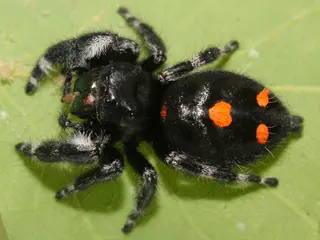 | Bold Jumper Phidippus audax Salticidae | 138 | 17 | September |
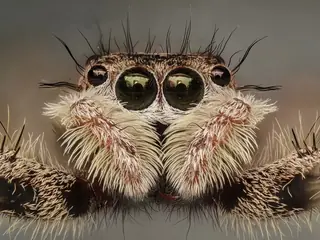 | Tan Jumper Platycryptus undatus Salticidae | 127 | 19 | August |
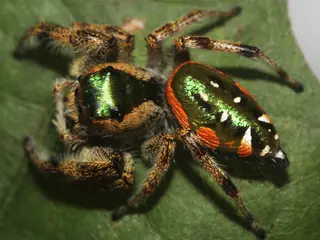 | Golden Jumping Spider Paraphidippus aurantius Salticidae | 104 | 13 | June |
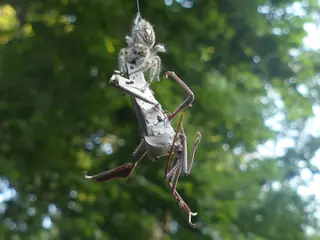 | Putnam's Jumper Phidippus putnami Salticidae | 92 | 11 | June |
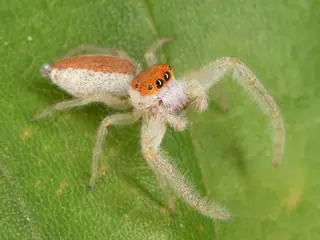 | White-Jawed Jumping Spider Hentzia mitrata Salticidae | 52 | 12 | May |
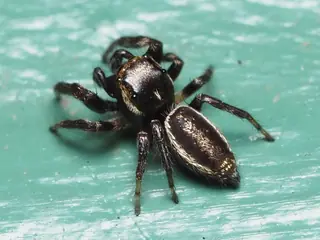 | Bronze Jumper Eris militaris Salticidae | 51 | 12 | October |
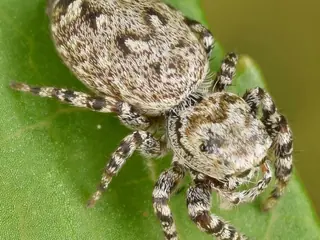 | Peppered Jumper Pelegrina galathea Salticidae | 51 | 10 | July |
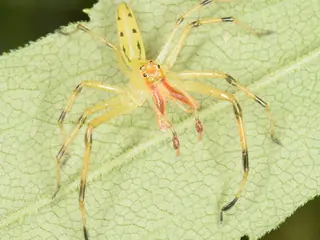 | Magnolia Green Jumper Lyssomanes viridis Salticidae | 47 | 10 | May |
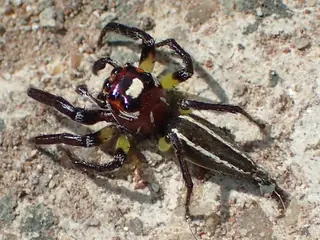 | Sylvan Jumping Spider Colonus sylvanus Salticidae | 46 | 13 | May |
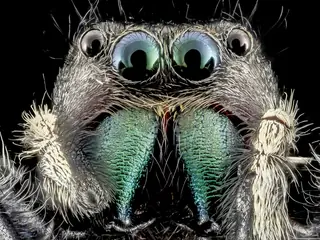 | Brilliant Jumper Phidippus clarus Salticidae | 38 | 13 | |
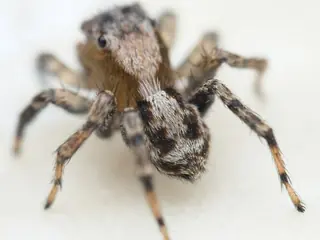 | Flea Jumping Spider Naphrys pulex Salticidae | 34 | 8 | May |
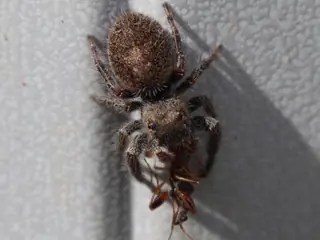 | Grayish Jumper Phidippus princeps Salticidae | 28 | 12 | |
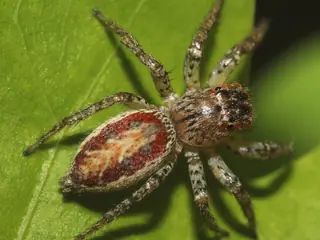 | Dimorphic Jumper Maevia inclemens Salticidae | 27 | 14 | |
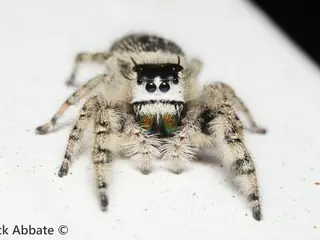 | Canopy Jumping Spider Phidippus otiosus Salticidae | 26 | 11 | |
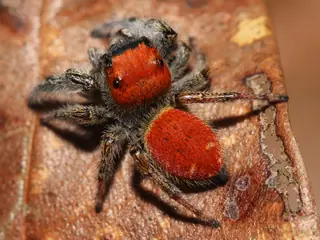 | Whitman's Jumping Spider Phidippus whitmani Salticidae | 17 | 10 | |
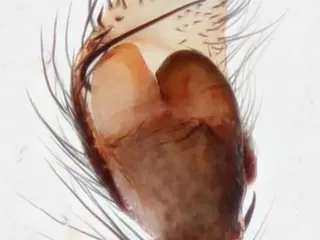 | Common Hentz Jumping Spider Hentzia palmarum Salticidae | 14 | 6 | |
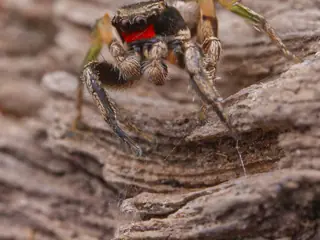 | Habronattus coecatus Habronattus coecatus Salticidae | 14 | 4 | |
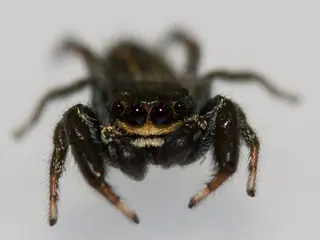 | Ribbon Jumping Spider Metacyrba taeniola Salticidae | 14 | 6 | |
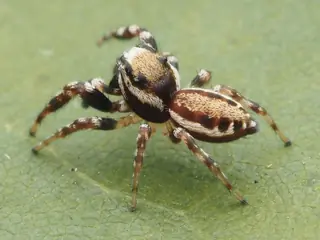 | Common White-Cheeked Jumping Spider Pelegrina proterva Salticidae | 10 | 7 |
A species is listed with ten or more open-licence records in Tennessee across three or more years since 2000. Records are observations and specimens under CC0 and CC BY licences; they follow observers as well as animals, so a species that is missing is not shown to be absent.
More Tennessee lists
Other groups in Tennessee
Jumping spiders in nearby states
Sources
- Catalogue of Life (via GBIF vernacular names). CC BY 4.0. Read 2026-11-16.
- GBIF Backbone Taxonomy. CC BY 4.0. Read 2026-11-15.
- GBIF occurrence records under CC0 and CC BY 4.0. CC0 and CC BY 4.0 per record. Read 2026-11-16.
- Integrated Taxonomic Information System. CC0. Read 2026-11-15.
- iNaturalist photographs under CC0 and CC BY. CC0 and CC BY per photograph. Read 2026-11-15.
How each figure is derived is set out on the methods page.