Salamanders in Alabama
42 species of salamanders have a mapped range in Alabama. 7 are mapped across the whole state, among them the Eastern Newt, the Marbled Salamander and the Red Salamander.
The most restricted is the Red Hills Salamander, mapped in 2% of the state.
The longest is the Two-toed Amphiuma, at 3.8 ft (1,162 mm); the shortest is the Seepage Salamander, at 2.2 in (57 mm).
The most species are mapped in Marshall County (24); the fewest in Randolph County (16).
Open-licence records in the state (16,111 of them) peak in March and are fewest in December.
The most often recorded is the Spotted Dusky Salamander, with 3,097 open-licence records in the state.
They belong to 7 families; the largest here is Plethodontidae, with 26 species.
- 16 to 17
- 18 to 19
- 20
- 21 to 22
- 23 to 24
| Species | Size | Share of Alabama | Active | Records | |
|---|---|---|---|---|---|
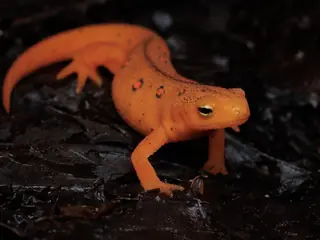 | Eastern Newt Notophthalmus viridescens Salamandridae | 5.5 in (140 mm) body | all | 351 | |
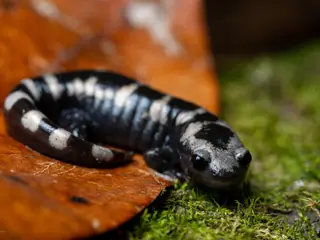 | Marbled Salamander Ambystoma opacum Ambystomatidae | 5.0 in (127 mm) body | all | 988 | |
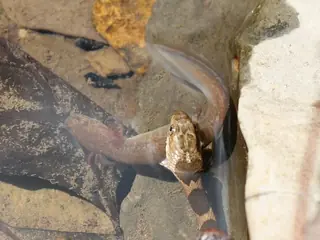 | Red Salamander Pseudotriton ruber Plethodontidae | 7.1 in (181 mm) body | all | 776 | |
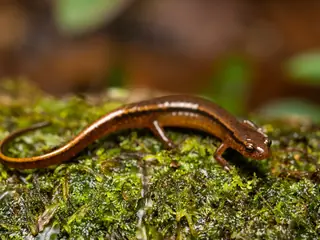 | Southern Two-lined Salamander Eurycea cirrigera Plethodontidae | all | 1,420 | ||
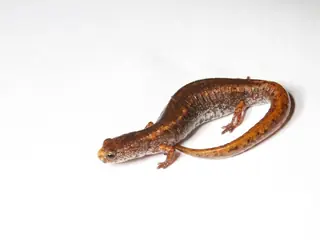 | Four-toed Salamander Hemidactylium scutatum Plethodontidae | 4.7 in (120 mm) body | all | 49 | |
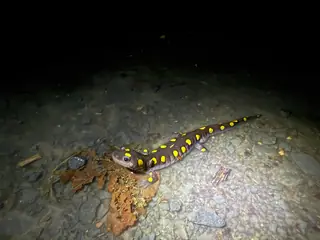 | Spotted Salamander Ambystoma maculatum Ambystomatidae | 9.8 in (248 mm) body | all | day | 272 |
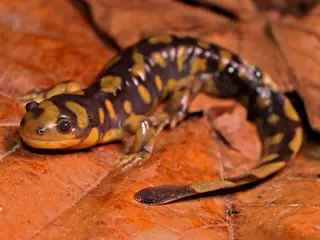 | Eastern Tiger Salamander Ambystoma tigrinum Ambystomatidae | 13 in (330 mm) body | all | 119 | |
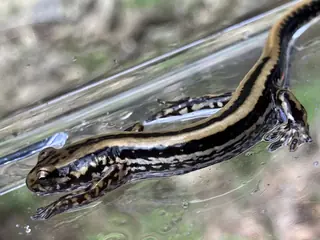 | Three-lined Salamander Eurycea guttolineata Plethodontidae | 5.5 in (140 mm) body | 98% | 711 | |
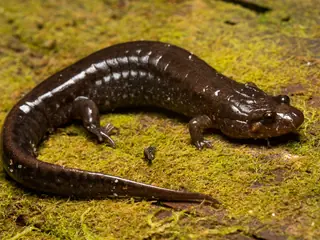 | Spotted Dusky Salamander Desmognathus conanti Plethodontidae | 96% | 3,097 | ||
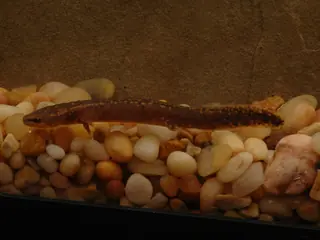 | Gulf Coast Waterdog Necturus beyeri Proteidae | 8.7 in (222 mm) body | 75% | 42 | |
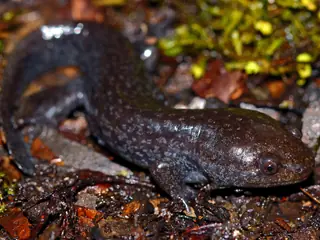 | Mole Salamander Ambystoma talpoideum Ambystomatidae | 4.8 in (122 mm) body | 69% | day | 84 |
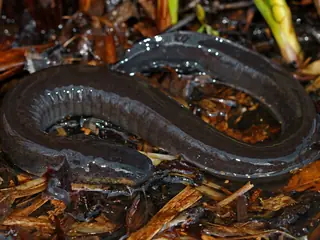 | Lesser Siren Siren intermedia Sirenidae | 2.3 ft (686 mm) body | 65% | night | 131 |
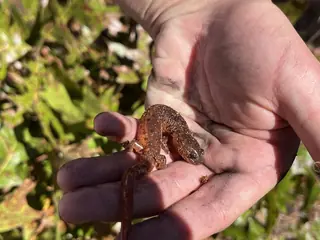 | Mud Salamander Pseudotriton montanus Plethodontidae | 8.1 in (207 mm) body | 64% | 53 | |
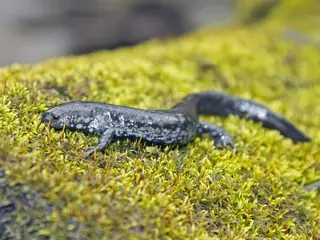 | Small-mouthed Salamander Ambystoma texanum Ambystomatidae | 7.0 in (178 mm) body | 55% | 19 | |
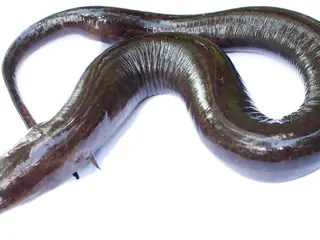 | Two-toed Amphiuma Amphiuma means Amphiumidae | 3.8 ft (1,162 mm) body | 55% | 73 | |
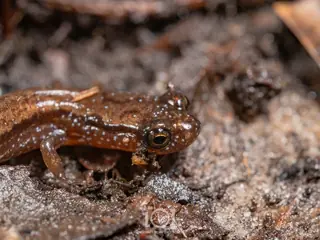 | Dwarf Salamander Eurycea quadridigitata Plethodontidae | 3.5 in (90 mm) body | 53% | day | 127 |
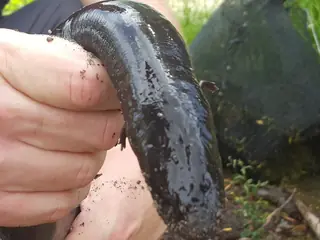 | Three-toed Amphiuma Amphiuma tridactylum Amphiumidae | 3.5 ft (1,060 mm) body | 38% | 10 | |
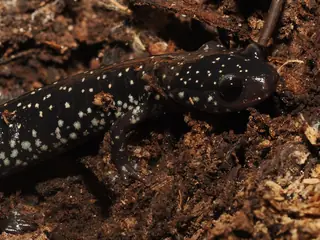 | Mississippi Slimy Salamander Plethodon mississippi Plethodontidae | 6.4 in (164 mm) body | 34% | 859 | |
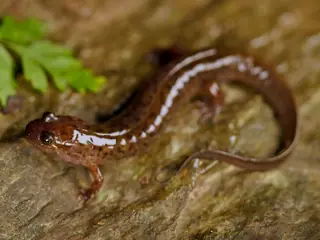 | Seal Salamander Desmognathus monticola Plethodontidae | 4.4 in (112 mm) body | 34% | 1,436 | |
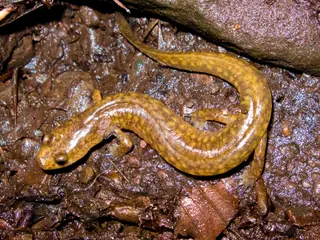 | Spring Salamander Gyrinophilus porphyriticus Plethodontidae | 9.1 in (232 mm) body | 33% | 189 | |
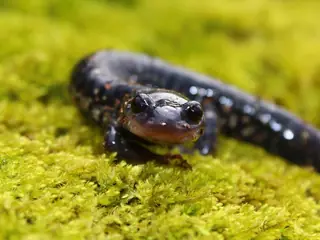 | Northern Slimy Salamander Plethodon glutinosus Plethodontidae | 8.1 in (206 mm) body | 31% | 1,172 | |
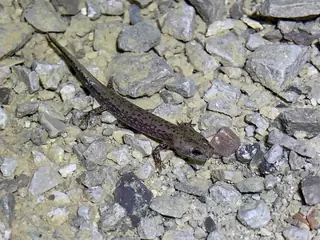 | Cave Salamander Eurycea lucifuga Plethodontidae | 7.1 in (181 mm) body | 30% | 294 | |
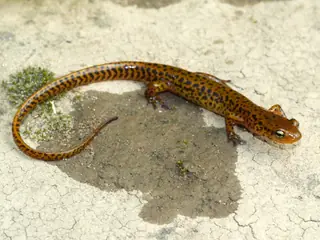 | Long-tailed Salamander Eurycea longicauda Plethodontidae | 7.9 in (200 mm) body | 29% | night | 280 |
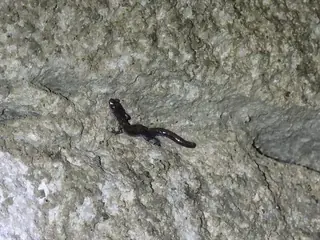 | Southern Zigzag Salamander Plethodon ventralis Plethodontidae | 27% | 703 | ||
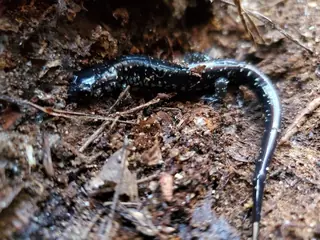 | Southeastern Slimy Salamander Plethodon grobmani Plethodontidae | 6.4 in (164 mm) body | 26% | 801 | |
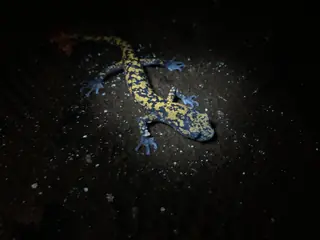 | Green Salamander Aneides aeneus Plethodontidae | 5.5 in (140 mm) body | 25% | night | 324 |
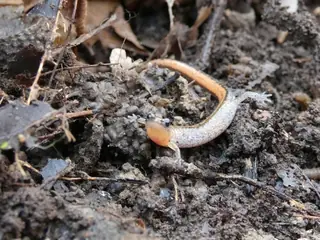 | Webster's Salamander Plethodon websteri Plethodontidae | 3.2 in (82 mm) body | 17% | 1,079 | |
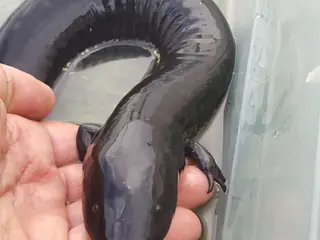 | Greater Siren Siren lacertina Sirenidae | 3.2 ft (978 mm) body | 17% | night | 57 |
| Southern Dusky Salamander Desmognathus auriculatus Plethodontidae | 6.4 in (163 mm) body | 15% | 97 | ||
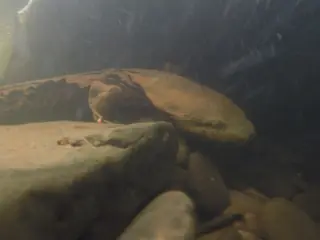 | Hellbender possible Cryptobranchus alleganiensis Cryptobranchidae | 2.4 ft (737 mm) body | 14% | 25 | |
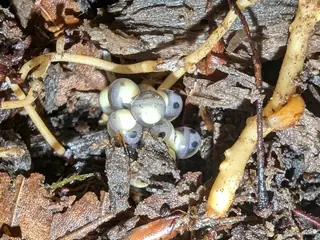 | Seepage Salamander Desmognathus aeneus Plethodontidae | 2.2 in (57 mm) body | 14% | 510 | |
| Black Warrior River Waterdog Necturus alabamensis Proteidae | 8.5 in (216 mm) body | 13% | 131 | ||
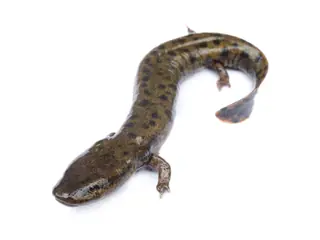 | Mudpuppy Necturus maculosus Proteidae | 19 in (486 mm) body | 13% | night | 39 |
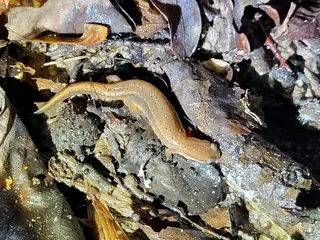 | Dark-sided Salamander Eurycea aquatica Plethodontidae | 11% | 269 | ||
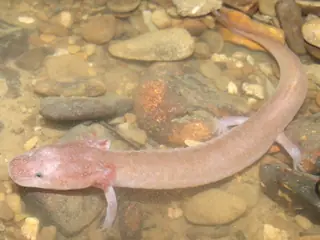 | Tennessee Cave Salamander Gyrinophilus palleucus Plethodontidae | 7.2 in (184 mm) body | 8% | 118 | |
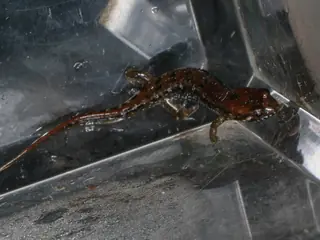 | Apalachicola Dusky Salamander Desmognathus apalachicolae Plethodontidae | 3.6 in (92 mm) body | 6% | 67 | |
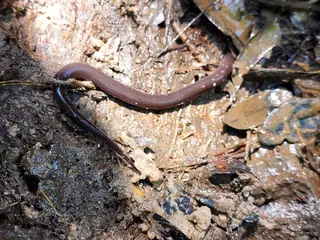 | One-toed Amphiuma Amphiuma pholeter Amphiumidae | 13 in (330 mm) body | 6% | 3 | |
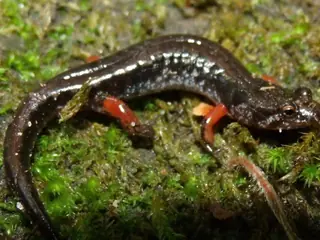 | Ocoee Salamander Desmognathus ocoee Plethodontidae | 4.3 in (110 mm) body | 6% | 197 | |
| Reticulated Flatwoods Salamander Ambystoma bishopi Ambystomatidae | 3.5 in (88 mm) body | 5% | 11 | ||
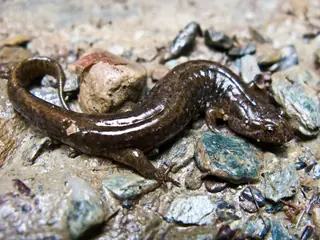 | Northern Dusky Salamander Desmognathus fuscus Plethodontidae | 4.0 in (100 mm) body | 4% | 524 | |
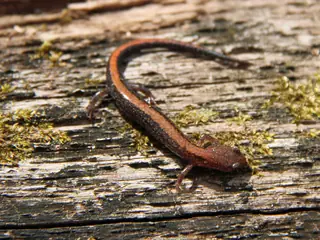 | Southern Red-backed Salamander Plethodon serratus Plethodontidae | 4.1 in (105 mm) body | 4% | 18 | |
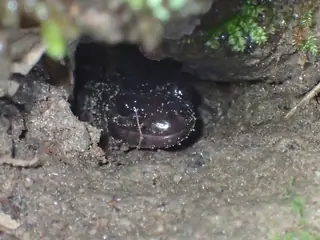 | Red Hills Salamander Phaeognathus hubrichti Plethodontidae | 7.0 in (178 mm) body | 2% | 167 |
Share of Alabama is the part of the state inside the species' USGS range map. Size is the largest on record where the source gives a maximum, otherwise a typical adult. Records are open-licence observations and specimens in the state; a blank means none were counted, not that the species is absent.
Other groups in Alabama
Salamanders in nearby states
Sources
- AmphiBIO v1. CC BY 4.0. Read 2026-11-15.
- GBIF Backbone Taxonomy. CC BY 4.0. Read 2026-11-15.
- GBIF occurrence records under CC0 and CC BY 4.0. CC0 and CC BY 4.0 per record. Read 2026-11-15.
- US Census Bureau cartographic boundary files 2023. Public domain (US Census Bureau). Read 2026-11-15.
- USGS GAP 12-digit hydrologic unit range units. Public domain (USGS). Read 2026-11-15.
- USGS Gap Analysis Project Species Range Maps CONUS_2001. Public domain (USGS). Read 2026-11-15.
- iNaturalist photographs under CC0 and CC BY. CC0 and CC BY per photograph. Read 2026-11-15.
How each figure is derived is set out on the methods page.