Introduced birds in Arizona
5 species of introduced birds have a mapped range in Arizona. 4 are mapped across the whole state, among them the Eurasian Collared-dove, the European Starling and the House Sparrow.
The most restricted is the Chukar, mapped in 6% of the state.
The heaviest is the Chukar, at 1.1 lb (0.5 kg); the lightest is the House Sparrow, at 0.9 oz (27 g).
Of these, 4 are mapped year-round and 1 on migration only.
The most species are mapped in Mohave County (5); the fewest in Apache County (4).
Open-licence records in the state (3,600 of them) peak in April and are fewest in August.
The most often recorded is the House Sparrow, with 1,871 open-licence records in the state.
They belong to 5 families; the largest here is Sturnidae, with 1 species.
- 4
- 5
| Species | Size | Share of Arizona | Active | Records | |
|---|---|---|---|---|---|
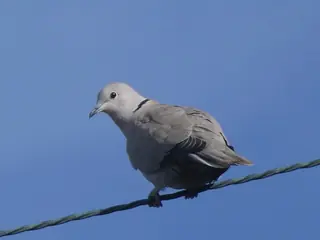 | Eurasian Collared-dove introduced Streptopelia decaocto Columbidae | 5.3 oz (149 g) | all | day | 990 |
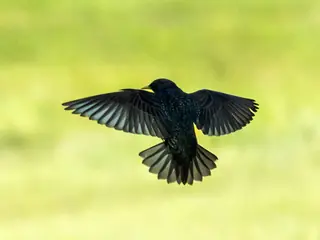 | European Starling introduced Sturnus vulgaris Sturnidae | 2.7 oz (77 g) | all | day | 732 |
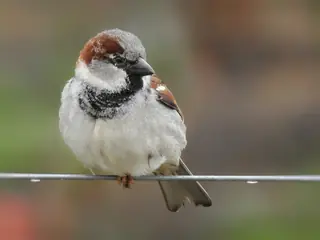 | House Sparrow introduced Passer domesticus Passeridae | 0.9 oz (27 g) | all | day | 1,871 |
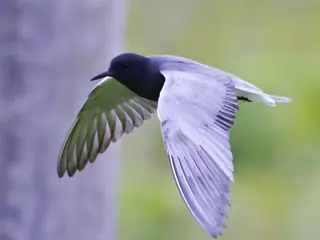 | Black Tern introducedmigration Chlidonias niger Laridae | 2.3 oz (65 g) | all | day | 22 |
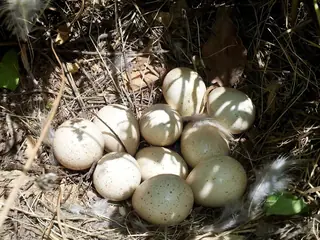 | Chukar introduced Alectoris chukar Phasianidae | 1.1 lb (0.5 kg) | 6% | day | 5 |
Share of Arizona is the part of the state inside the species' USGS range map. Size is the largest on record where the source gives a maximum, otherwise a typical adult. Records are open-licence observations and specimens in the state, with eBird left out; a blank means none were counted, not that the species is absent.
More Arizona lists
Other groups in Arizona
Introduced birds in nearby states
Sources
- AVONET: morphological ecological and geographical data for all birds. CC BY 4.0. Read 2026-11-15.
- EltonTraits 1.0. CC0. Read 2026-11-15.
- GBIF Backbone Taxonomy. CC BY 4.0. Read 2026-11-15.
- GBIF occurrence records under CC0 and CC BY 4.0. CC0 and CC BY 4.0 per record. Read 2026-11-15.
- US Census Bureau cartographic boundary files 2023. Public domain (US Census Bureau). Read 2026-11-15.
- USGS GAP 12-digit hydrologic unit range units. Public domain (USGS). Read 2026-11-15.
- USGS Gap Analysis Project Species Range Maps CONUS_2001. Public domain (USGS). Read 2026-11-15.
- iNaturalist photographs under CC0 and CC BY. CC0 and CC BY per photograph. Read 2026-11-15.
How each figure is derived is set out on the methods page.