Rodents in Georgia
29 species of rodents have a mapped range in Georgia. 9 are mapped across the whole state, among them the American Beaver, the Brown Rat and the Eastern Fox Squirrel.
The most restricted is the Southern Bog Lemming, mapped in 2% of the state.
The longest is the American Beaver, at 2.6 ft (777 mm); the shortest is the Eastern Harvest Mouse, at 2.8 in (70 mm).
USGS marks 4 of them as introduced in the state: the Brown Rat, the House Mouse, the Roof Rat and the Coypu.
The most species are mapped in White County (24); the fewest in McIntosh County (15).
Open-licence records in the state (11,138 of them) peak in May and are fewest in January.
The most often recorded is the Cotton Deermouse, with 2,813 open-licence records in the state.
By the trait records, 17 are active at night, 7 are active by day and by night and 5 are active by day.
They belong to 7 families; the largest here is Cricetidae, with 15 species.
- 15 to 16
- 17 to 18
- 19 to 20
- 21 to 22
- 23 to 24
| Species | Size | Share of Georgia | Active | Records | |
|---|---|---|---|---|---|
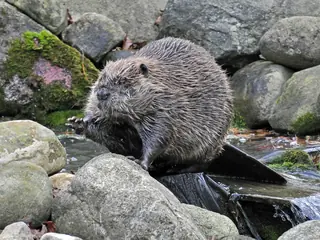 | American Beaver Castor canadensis Castoridae | 2.6 ft (777 mm) body | all | night | 114 |
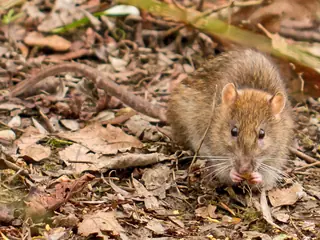 | Brown Rat introducedpossible Rattus norvegicus Muridae | 12 in (300 mm) body | all | night | 37 |
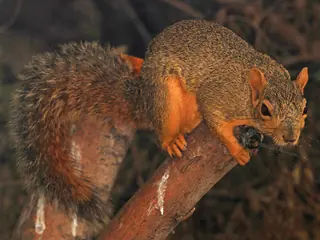 | Eastern Fox Squirrel Sciurus niger Sciuridae | 16 in (418 mm) body | all | day | 132 |
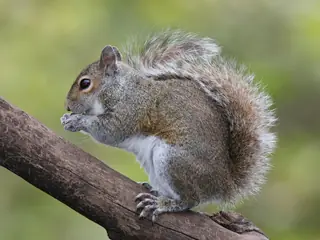 | Eastern Gray Squirrel Sciurus carolinensis Sciuridae | 12 in (315 mm) body | all | day | 1,471 |
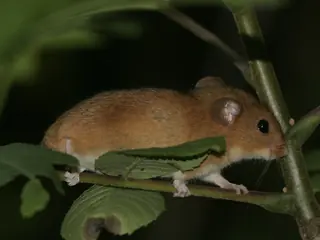 | Golden Mouse Ochrotomys nuttalli Cricetidae | 3.8 in (97 mm) body | all | night | 130 |
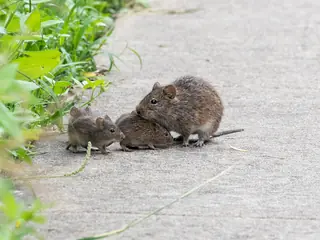 | Hispid Cotton Rat Sigmodon hispidus Cricetidae | 7.3 in (185 mm) body | all | day and night | 2,637 |
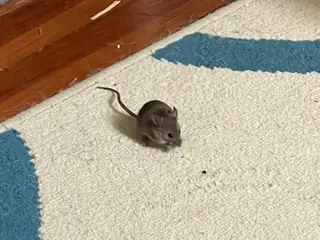 | House Mouse introducedpossible Mus musculus Muridae | 3.7 in (95 mm) body | all | night | 528 |
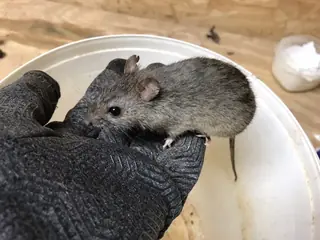 | Marsh Oryzomys Oryzomys palustris Cricetidae | 5.6 in (142 mm) body | all | day and night | 189 |
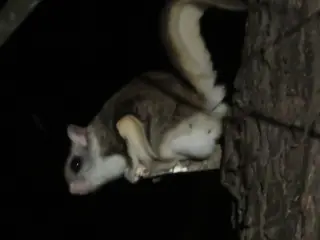 | Southern Flying Squirrel Glaucomys volans Sciuridae | 6.8 in (172 mm) body | all | night | 107 |
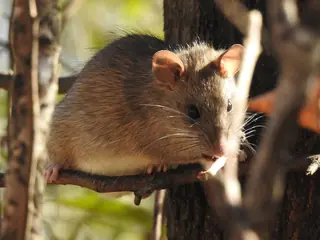 | Roof Rat introducedpossible Rattus rattus Muridae | 8.0 in (202 mm) body | 99% | night | 182 |
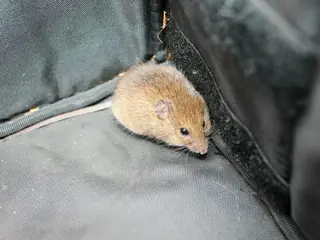 | Eastern Harvest Mouse Reithrodontomys humulis Cricetidae | 2.8 in (70 mm) body | 93% | night | 63 |
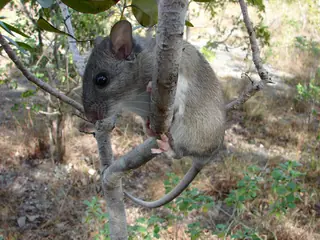 | Eastern Woodrat Neotoma floridana Cricetidae | 8.4 in (214 mm) body | 92% | night | 756 |
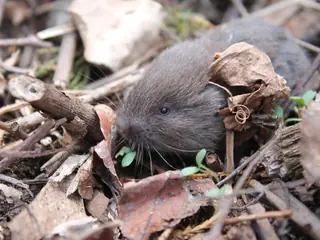 | Woodland Vole Microtus pinetorum Cricetidae | 4.1 in (103 mm) body | 88% | day and night | 61 |
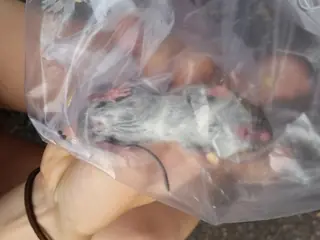 | Oldfield Deermouse Peromyscus polionotus Cricetidae | 3.8 in (97 mm) body | 80% | night | 1,231 |
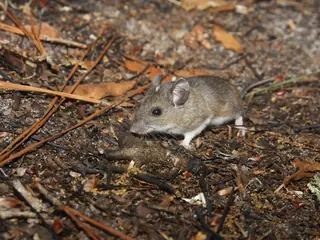 | Cotton Deermouse Peromyscus gossypinus Cricetidae | 4.0 in (103 mm) body | 71% | night | 2,813 |
 | Southeastern Pocket Gopher Geomys pinetis Geomyidae | 9.4 in (240 mm) body | 64% | day and night | 336 |
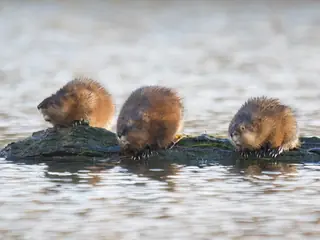 | Common Muskrat Ondatra zibethicus Cricetidae | 12 in (301 mm) body | 54% | night | 21 |
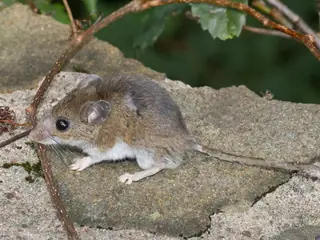 | White-footed Deermouse Peromyscus leucopus Cricetidae | 4.0 in (101 mm) body | 49% | night | 171 |
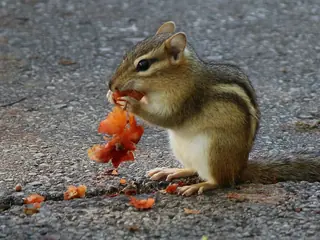 | Eastern Chipmunk Tamias striatus Sciuridae | 6.5 in (166 mm) body | 42% | day | 240 |
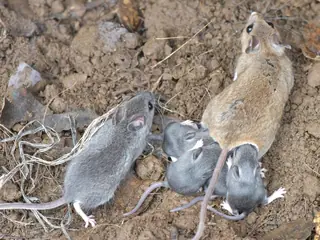 | North American Deermouse Peromyscus maniculatus Cricetidae | 3.9 in (99 mm) body | 35% | night | 46 |
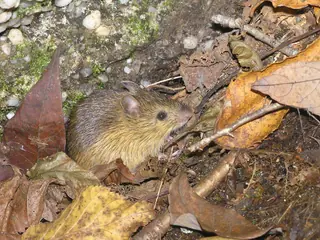 | Meadow Jumping Mouse Zapus hudsonius Dipodidae | 3.9 in (98 mm) body | 31% | night | 2 |
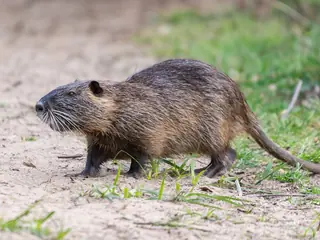 | Coypu introducedpossible Myocastor coypus Myocastoridae | 23 in (577 mm) body | 28% | night | 2 |
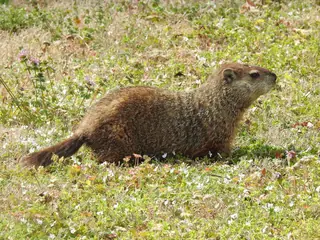 | Woodchuck Marmota monax Sciuridae | 20 in (506 mm) body | 21% | day | 30 |
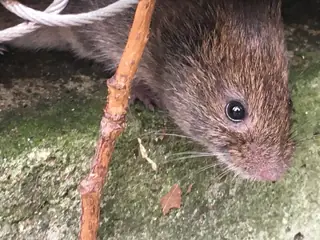 | Meadow Vole Microtus pennsylvanicus Cricetidae | 4.8 in (122 mm) body | 17% | day and night | 1 |
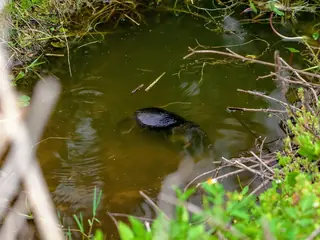 | Round-tailed Muskrat Neofiber alleni Cricetidae | 8.4 in (213 mm) body | 10% | night | 28 |
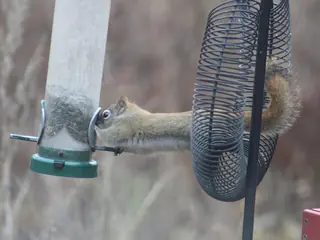 | Red Squirrel Tamiasciurus hudsonicus Sciuridae | 7.5 in (190 mm) body | 6% | day | 1 |
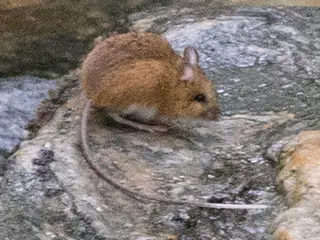 | Woodland Jumping Mouse Napaeozapus insignis Dipodidae | 3.7 in (95 mm) body | 4% | night | 1 |
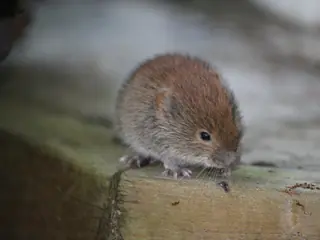 | Southern Red-backed Vole Myodes gapperi Cricetidae | 4.3 in (110 mm) body | 2% | day and night | 2 |
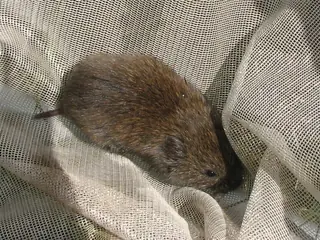 | Southern Bog Lemming Synaptomys cooperi Cricetidae | 4.6 in (118 mm) body | 2% | day and night | 1 |
Share of Georgia is the part of the state inside the species' USGS range map. Size is the largest on record where the source gives a maximum, otherwise a typical adult. Records are open-licence observations and specimens in the state; a blank means none were counted, not that the species is absent.
More Georgia lists
Other groups in Georgia
Rodents in nearby states
Sources
- COMBINE: a coalesced mammal database of intrinsic and extrinsic traits. CC BY 4.0. Read 2026-11-15.
- EltonTraits 1.0. CC0. Read 2026-11-15.
- GBIF Backbone Taxonomy. CC BY 4.0. Read 2026-11-15.
- GBIF occurrence records under CC0 and CC BY 4.0. CC0 and CC BY 4.0 per record. Read 2026-11-15.
- US Census Bureau cartographic boundary files 2023. Public domain (US Census Bureau). Read 2026-11-15.
- USGS GAP 12-digit hydrologic unit range units. Public domain (USGS). Read 2026-11-15.
- USGS Gap Analysis Project Species Range Maps CONUS_2001. Public domain (USGS). Read 2026-11-15.
- iNaturalist photographs under CC0 and CC BY. CC0 and CC BY per photograph. Read 2026-11-15.
How each figure is derived is set out on the methods page.