Sparrows in Alabama
20 species of sparrows have a mapped range in Alabama. 13 are mapped across the whole state, among them the Bachman's Sparrow, the Chipping Sparrow and the Eastern Towhee.
The most restricted is the Nelson's Sharp-tailed Sparrow, mapped in 2% of the state.
The heaviest is the Eastern Towhee, at 1.4 oz (40 g); the lightest is the Chipping Sparrow, at 0.4 oz (12 g).
Of these, 6 are mapped year-round, 1 in summer only, 12 in winter only and 1 on migration only.
The most species are mapped in Mobile County (18); the fewest in Barbour County (15).
Open-licence records in the state (2,167 of them) peak in November and are fewest in September.
The most often recorded is the White-throated Sparrow, with 602 open-licence records in the state.
- 15
- 16
- 17
- 18
| Species | Size | Share of Alabama | Active | Records | |
|---|---|---|---|---|---|
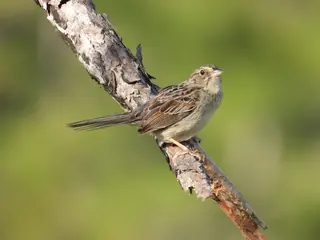 | Bachman's Sparrow Peucaea aestivalis Passerellidae | 0.7 oz (20 g) | all | day | 61 |
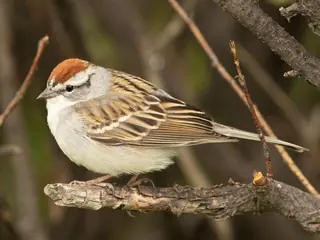 | Chipping Sparrow Spizella passerina Passerellidae | 0.4 oz (12 g) | all | day | 271 |
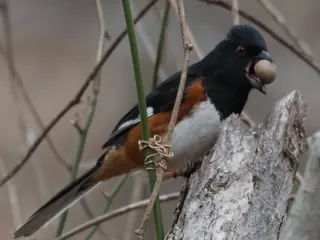 | Eastern Towhee Pipilo erythrophthalmus Passerellidae | 1.4 oz (40 g) | all | day | 422 |
 | Field Sparrow Spizella pusilla Passerellidae | 0.4 oz (12 g) | all | day | 130 |
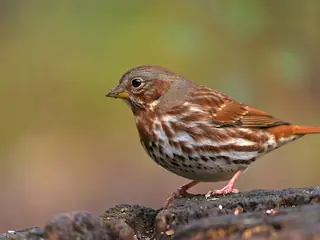 | Fox Sparrow winter Passerella iliaca Passerellidae | 1.2 oz (33 g) | all | day | 15 |
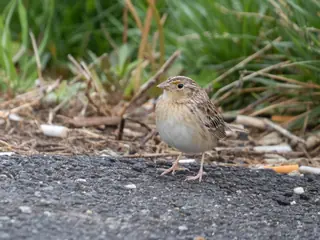 | Grasshopper Sparrow Ammodramus savannarum Passerellidae | 0.6 oz (18 g) | all | day | 35 |
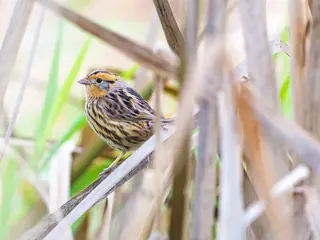 | Le Conte's Sparrow winter Ammospiza leconteii Passerellidae | 0.5 oz (13 g) | all | day | 2 |
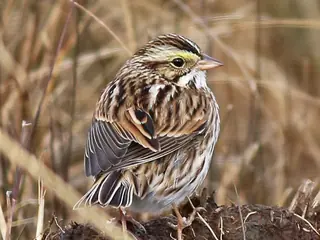 | Savannah Sparrow winter Passerculus sandwichensis Passerellidae | 0.7 oz (20 g) | all | day | 76 |
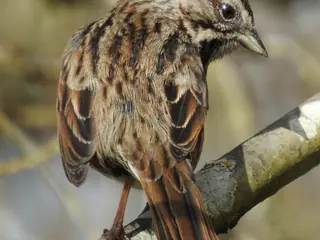 | Song Sparrow winter Melospiza melodia Passerellidae | 0.8 oz (22 g) | all | day | 256 |
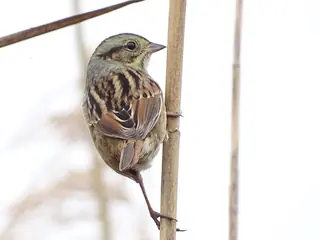 | Swamp Sparrow winter Melospiza georgiana Passerellidae | 0.6 oz (16 g) | all | day | 137 |
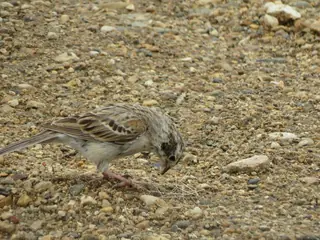 | Vesper Sparrow winter Pooecetes gramineus Passerellidae | 0.9 oz (26 g) | all | day | 41 |
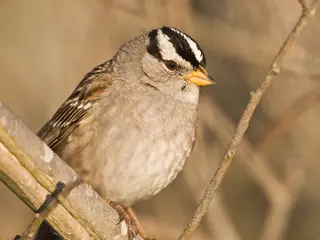 | White-crowned Sparrow winter Zonotrichia leucophrys Passerellidae | 1.0 oz (28 g) | all | day | 13 |
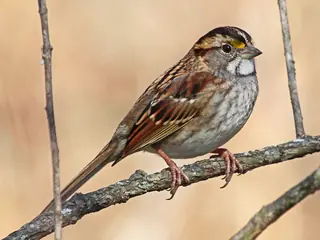 | White-throated Sparrow winter Zonotrichia albicollis Passerellidae | 0.9 oz (24 g) | all | day | 602 |
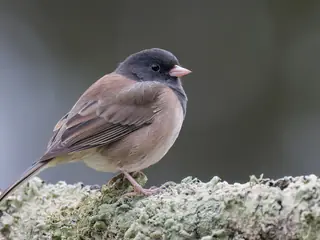 | Dark-eyed Junco winter Junco hyemalis Passerellidae | 0.7 oz (20 g) | 99% | day | 182 |
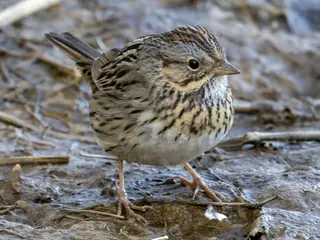 | Lincoln's Sparrow migration Melospiza lincolnii Passerellidae | 0.6 oz (17 g) | 88% | day | 1 |
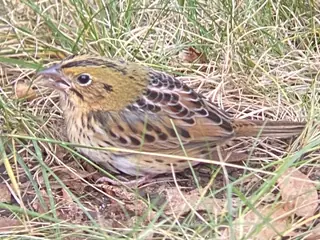 | Henslow's Sparrow winter Centronyx henslowii Passerellidae | 0.5 oz (13 g) | 66% | day | 5 |
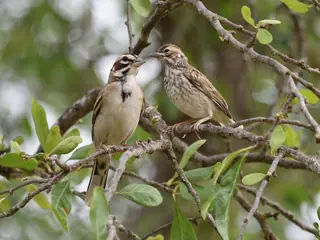 | Lark Sparrow summer Chondestes grammacus Passerellidae | 1.0 oz (29 g) | 39% | day | 7 |
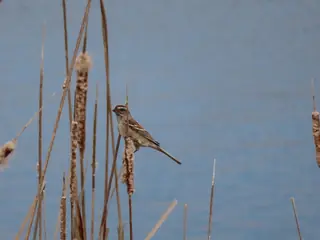 | American Tree Sparrow winter Spizelloides arborea Passerellidae | 0.6 oz (18 g) | 2% | day | 1 |
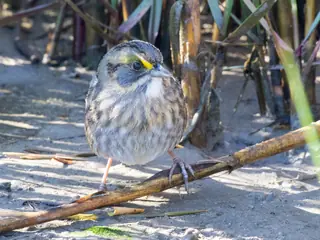 | Seaside Sparrow Ammospiza maritima Passerellidae | 0.8 oz (22 g) | 2% | day | 30 |
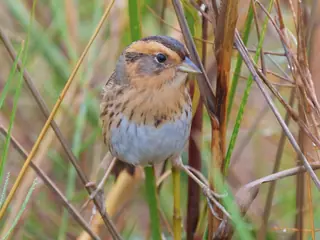 | Nelson's Sharp-tailed Sparrow winter Ammospiza nelsoni Passerellidae | 0.5 oz (15 g) | 2% | day | 6 |
Share of Alabama is the part of the state inside the species' USGS range map. Size is the largest on record where the source gives a maximum, otherwise a typical adult. Records are open-licence observations and specimens in the state, with eBird left out; a blank means none were counted, not that the species is absent.
More Alabama lists
Other groups in Alabama
Sparrows in nearby states
Sources
- AVONET: morphological ecological and geographical data for all birds. CC BY 4.0. Read 2026-11-15.
- EltonTraits 1.0. CC0. Read 2026-11-15.
- GBIF Backbone Taxonomy. CC BY 4.0. Read 2026-11-15.
- GBIF occurrence records under CC0 and CC BY 4.0. CC0 and CC BY 4.0 per record. Read 2026-11-15.
- US Census Bureau cartographic boundary files 2023. Public domain (US Census Bureau). Read 2026-11-15.
- USGS GAP 12-digit hydrologic unit range units. Public domain (USGS). Read 2026-11-15.
- USGS Gap Analysis Project Species Range Maps CONUS_2001. Public domain (USGS). Read 2026-11-15.
- iNaturalist photographs under CC0 and CC BY. CC0 and CC BY per photograph. Read 2026-11-15.
How each figure is derived is set out on the methods page.