Spiders in Nevada
12 species of spiders have ten or more open-licence records in three or more years in Nevada, and 1 of them is venomous. The venomous species is the Western Black Widow. It belongs to the genera of the two venomous spiders the CDC names for the United States (the black widow and the brown recluse).
Open-licence records in the state that carry a month (288 of them) peak in June and are fewest in January.
The most often recorded is the Western Black Widow, with 59 open-licence records in the state.
By kind, 7 are jumping spiders, 2 are orb-weaver spiders, 1 is a cellar spider, 1 is a tarantula and 1 is a widow spider.
They belong to 5 families; the largest here is Salticidae, with 7 species.
The list rests on 527 open-licence records of spiders in the state; 73 further species have records there but fewer than ten, or in fewer than three years.
| Species | Open records | Years | Peak month | |
|---|---|---|---|---|
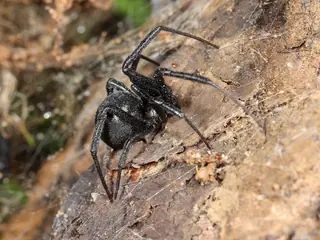 | Western Black Widow venomous Latrodectus hesperus Theridiidae | 59 | 15 | June |
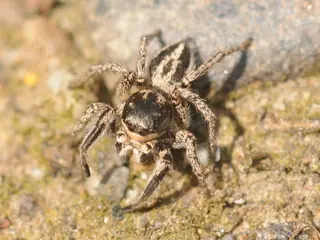 | Habronattus tarsalis Habronattus tarsalis Salticidae | 56 | 6 | June |
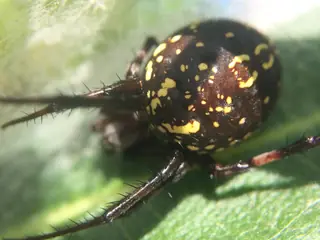 | Western Spotted Orbweaver Neoscona oaxacensis Araneidae | 35 | 13 | |
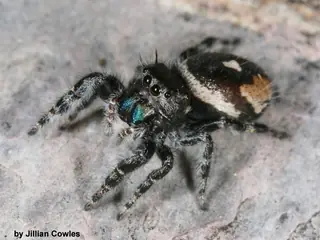 | Phidippus californicus Phidippus californicus Salticidae | 33 | 12 | |
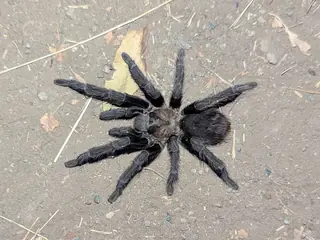 | Bay Area Blonde Aphonopelma iodius Theraphosidae | 30 | 13 | |
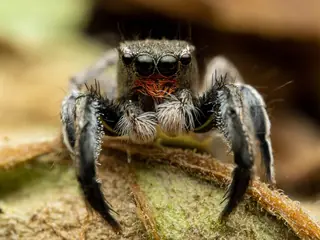 | Hirsute Paradise Spider Habronattus hirsutus Salticidae | 27 | 13 | |
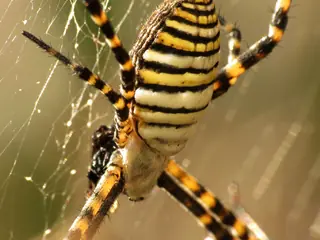 | Banded Garden Spider Argiope trifasciata Araneidae | 22 | 12 | |
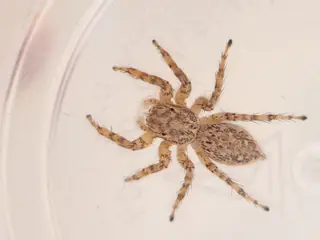 | Plexippoides flavescens Plexippoides flavescens Salticidae | 20 | 6 | |
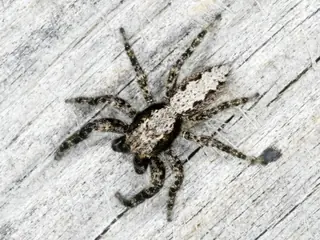 | California Flattened Jumping Spider Platycryptus californicus Salticidae | 18 | 8 | |
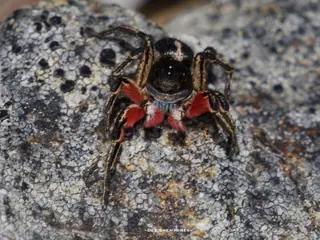 | Habronattus americanus Habronattus americanus Salticidae | 15 | 4 | |
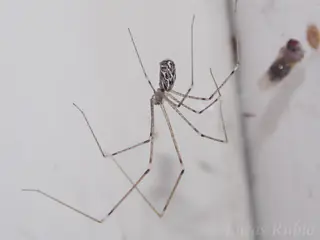 | Marbled Cellar Spider Holocnemus pluchei Pholcidae | 12 | 7 | |
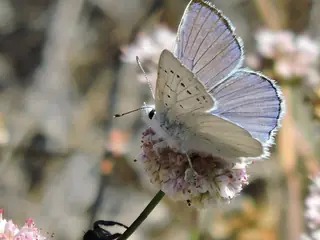 | Johnson Jumper Phidippus johnsoni Salticidae | 11 | 8 |
A species is listed with ten or more open-licence records in Nevada across three or more years since 2000. Records are observations and specimens under CC0 and CC BY licences; they follow observers as well as animals, so a species that is missing is not shown to be absent.
More Nevada lists
Other groups in Nevada
Spiders in nearby states
Sources
- CDC NIOSH venomous snakes and venomous spiders pages. Public domain (CDC). Read 2026-11-15.
- Catalogue of Life (via GBIF vernacular names). CC BY 4.0. Read 2026-11-16.
- GBIF Backbone Taxonomy. CC BY 4.0. Read 2026-11-15.
- GBIF occurrence records under CC0 and CC BY 4.0. CC0 and CC BY 4.0 per record. Read 2026-11-16.
- Integrated Taxonomic Information System. CC0. Read 2026-11-15.
- iNaturalist photographs under CC0 and CC BY. CC0 and CC BY per photograph. Read 2026-11-15.
How each figure is derived is set out on the methods page.