Shrews in Texas
6 species of shrews have a mapped range in Texas. The most widespread is the North American Least Shrew, mapped across 68% of the state.
The most restricted is the Elliot's Short-tailed Shrew, mapped in 2% of the state.
The longest is the Southern Short-tailed Shrew, at 4.0 in (102 mm); the shortest is the Dwarf Shrew, at 2.2 in (56 mm).
The most species are mapped in Sherman County (3); the fewest in Mason County (0).
Open-licence records in the state (1,040 of them) peak in January and are fewest in September.
The most often recorded is the North American Least Shrew, with 719 open-licence records in the state.
By the trait records, 4 are active by day and by night and 2 are active at night.
- North American Least Shrew
- Crawford's Gray Shrew
- Southern Short-tailed Shrew
- Dwarf Shrew
- Merriam's Shrew
- Elliot's Short-tailed Shrew
| Species | Size | Share of Texas | Active | Records | |
|---|---|---|---|---|---|
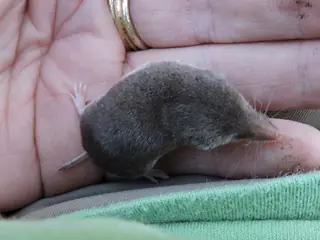 | North American Least Shrew Cryptotis parva Soricidae | 2.9 in (73 mm) body | 68% | night | 719 |
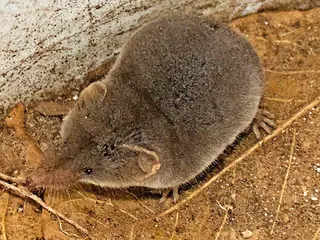 | Crawford's Gray Shrew Notiosorex crawfordi Soricidae | 2.5 in (63 mm) body | 58% | night | 300 |
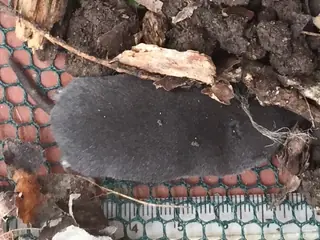 | Southern Short-tailed Shrew Blarina carolinensis Soricidae | 4.0 in (102 mm) body | 7% | day and night | 160 |
| Dwarf Shrew possible Sorex nanus Soricidae | 2.2 in (56 mm) body | 2% | day and night | ||
| Merriam's Shrew Sorex merriami Soricidae | 2.4 in (62 mm) body | 2% | day and night | 1 | |
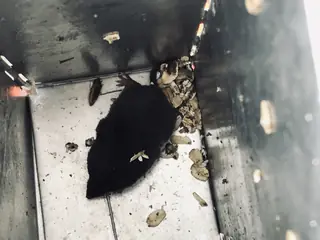 | Elliot's Short-tailed Shrew Blarina hylophaga Soricidae | 4.0 in (102 mm) body | 2% | day and night | 70 |
Share of Texas is the part of the state inside the species' USGS range map. Size is the largest on record where the source gives a maximum, otherwise a typical adult. Records are open-licence observations and specimens in the state; a blank means none were counted, not that the species is absent.
More Texas lists
Other groups in Texas
Shrews in nearby states
Sources
- COMBINE: a coalesced mammal database of intrinsic and extrinsic traits. CC BY 4.0. Read 2026-11-15.
- EltonTraits 1.0. CC0. Read 2026-11-15.
- GBIF Backbone Taxonomy. CC BY 4.0. Read 2026-11-15.
- GBIF occurrence records under CC0 and CC BY 4.0. CC0 and CC BY 4.0 per record. Read 2026-11-15.
- US Census Bureau cartographic boundary files 2023. Public domain (US Census Bureau). Read 2026-11-15.
- USGS GAP 12-digit hydrologic unit range units. Public domain (USGS). Read 2026-11-15.
- USGS Gap Analysis Project Species Range Maps CONUS_2001. Public domain (USGS). Read 2026-11-15.
- iNaturalist photographs under CC0 and CC BY. CC0 and CC BY per photograph. Read 2026-11-15.
How each figure is derived is set out on the methods page.